
Tech
Exploring the Depths of Guia Silent Hill Geekzilla Ultimate Guide


Guia Silent Hill Geekzilla
Silent Hill fans, this one’s for you. Whether you’re a seasoned traveler of the foggy streets or a newcomer eager to explore its mysteries, our guide promises to be your compass in this haunting realm. With Geekzilla’s unique insights, we aim to deepen your understanding and appreciation of Silent Hill like never before.
Welcome to the Chilling Realm
Silent Hill is more than just a game; it’s an experience. This guide is designed to immerse you in its eerie atmosphere, unravel its complex storylines, and master its gameplay mechanics. Geekzilla’s expertise in video game analysis provides a fresh perspective that combines detailed knowledge with a deep love for the franchise.
Geekzilla’s Unique Perspective
Geekzilla has long been a trusted name in the gaming community, known for its in-depth analysis and unique approach to video game content. Our focus is on dissecting games to their core, revealing layers that casual players might miss. With Silent Hill, we’ve poured our collective heart and soul into creating a guide that serves both veterans and newcomers alike.
An Overview of the Silent Hill Video Game Series
Silent Hill has a rich history that spans over two decades, capturing the hearts and minds of horror enthusiasts worldwide. Let’s take a closer look at its inception, key milestones, and the evolution of its themes.
Inception and Evolution
Silent Hill was born from the creative minds at Konami in 1999. The initial release stunned players with its psychological horror elements and atmospheric storytelling. Over the years, the series has evolved, incorporating new gameplay mechanics and narrative techniques to keep the experience fresh and engaging.
Key Milestones
Several releases have marked significant moments in the Silent Hill timeline. Silent Hill 2, often hailed as a masterpiece, introduced us to James Sunderland’s harrowing quest. Silent Hill 3 continued the legacy with Heather Mason’s chilling tale, and Silent Hill 4: The Room took a bold step by altering the traditional gameplay structure. Each installment has left an indelible mark on the gaming landscape.
Thematic Shifts
Silent Hill’s themes have also evolved, reflecting changes in societal fears and psychological exploration. The series started with straightforward horror but soon dived into more complex narratives involving guilt, redemption, and existential dread. These thematic shifts have made Silent Hill a thought-provoking experience that goes beyond mere jump scares.
An Inside Look at the Geekzilla Universe
Geekzilla isn’t just a platform but a community of passionate gamers and analysts dedicated to exploring the intricacies of video games. Our approach to Silent Hill is no different, as we aim to provide a guide that enriches your gaming experience.
History and Mission
Geekzilla was founded with the mission to offer deep-dive analyses and comprehensive guides for gamers seeking more than surface-level content. Our team comprises industry veterans, game designers, and hardcore gamers who share a passion for dissecting games to uncover hidden gems and nuanced storytelling.
Unique Approach
What sets Geekzilla apart is our method of dissecting video games. We don’t just play; we analyze, interpret, and critique. Our Silent Hill guide is a testament to this approach, combining meticulous research with a keen understanding of the game’s mechanics and lore. We aim to provide insights that enhance your gameplay and deepen your appreciation for the series.
Why This Guide is Essential
In a sea of gaming guides, Geekzilla’s Silent Hill guide stands out for its depth and breadth. Whether you’re a newcomer looking to understand the basics or a veteran seeking to uncover every secret, this guide offers something for everyone. Our insights are designed to enrich your gameplay, making each moment in Silent Hill more immersive and impactful.
Geekzilla’s Guide to Silent Hill Gameplay
One of the most compelling aspects of Silent Hill is its unique gameplay mechanics. From navigating fog-shrouded streets to solving intricate puzzles, every element is designed to draw you deeper into its world.
Gameplay Mechanics
At its core, Silent Hill combines exploration, combat, and puzzle-solving. The controls are intuitive but mastering them requires practice. Combat strategies vary depending on the enemy, and understanding these nuances can mean the difference between life and death. The atmospheric elements, such as fog and ambient sounds, play a crucial role in heightening the sense of dread.
Navigating the Guia Cosmos
Exploring Silent Hill is both thrilling and terrifying. The game’s world is meticulously designed, with hidden paths and landmarks that add layers to the experience. Geekzilla’s guide provides tips for navigating this cosmos, helping you find hidden items, secret areas, and crucial story elements. Pay attention to subtle environmental cues; they often lead to significant discoveries.
Mastering Gameplay
Mastering Silent Hill requires a blend of strategy and intuition. Our guide offers strategies for overcoming challenges, from combat tips to puzzle solutions. We also provide advice on how to immerse yourself fully in the story, encouraging you to take your time and absorb the atmosphere. Silent Hill is best experienced slowly, savoring each moment of tension and revelation.
The Importance of Atmosphere in Silent Hill
Silent Hill’s atmosphere is one of its most defining features. The game uses a combination of visual and auditory elements to create a sense of unease that permeates every moment.
Visual Elements
The fog that envelops Silent Hill is more than just a graphical effect; it’s a character in itself. It obscures your vision, making every step forward a leap into the unknown. The town’s decaying buildings and eerie landscapes add to the sense of desolation. Geekzilla’s guide will help you appreciate these visual elements and understand their significance.
Auditory Elements
Silent Hill’s sound design is masterful. From the unsettling ambient noises to the haunting musical score, every sound is designed to keep you on edge. The use of silence is equally powerful, often making your heartbeat the loudest sound in the room. Our guide explores how these auditory elements contribute to the overall horror experience.
Emotional Impact
The atmosphere in Silent Hill isn’t just about fear; it’s about evoking a range of emotions. The game explores themes of guilt, loss, and redemption, making it a deeply personal experience for many players. Geekzilla’s guide provides insights into these emotional layers, helping you connect with the story on a deeper level.
The Best Puzzles in Silent Hill
Puzzles are a significant part of Silent Hill, offering both challenge and reward. They are intricately designed, often requiring you to think outside the box.
Classic Puzzles
Some puzzles in Silent Hill have become iconic. The piano puzzle in Silent Hill 1 and the coin puzzle in Silent Hill 2 are prime examples. These puzzles are not only challenging but also deeply connected to the game’s story and themes. Our guide offers step-by-step solutions and insights into their design.
Hidden Meanings
Many puzzles in Silent Hill carry hidden meanings that add depth to the story. For example, the puzzles in Silent Hill 2 often reflect James Sunderland’s inner turmoil. Understanding these hidden layers can enhance your appreciation of the game. Geekzilla’s guide deciphers these meanings, providing context and interpretation.
Tips for Solving Puzzles
Solving puzzles in Silent Hill requires patience and attention to detail. Our guide offers tips for approaching puzzles, from examining your surroundings to considering the game’s themes. We also provide advice on how to manage your inventory and use items effectively.
Combat Strategies in Silent Hill
Combat in Silent Hill is designed to be tense and challenging. Each enemy encounter is a test of your skills and strategy.
Understanding Enemies
Silent Hill’s enemies are more than just obstacles; they are manifestations of the characters’ fears and regrets. Understanding the symbolism behind each enemy can provide insights into the story. Geekzilla’s guide offers detailed descriptions of common enemies and strategies for defeating them.
Efficient Use of Resources
Resources in Silent Hill are scarce, making their management crucial. From conserving ammunition to using healing items wisely, our guide provides tips for making the most of what you have. We also offer advice on when to fight and when to flee, helping you survive the horrors of Silent Hill.
Advanced Combat Techniques
For those looking to master combat, our guide offers advanced techniques. From targeting enemy weak points to utilizing the environment to your advantage, these strategies can give you the edge in battle. We also provide tips for dealing with boss encounters, which often require a combination of strategy and skill.
Immersing Yourself in the Silent Hill Story
The story is the heart of Silent Hill, weaving a complex narrative that draws you into its world.
Character Analysis
Silent Hill’s characters are deeply flawed and human, each with their own motivations and fears. Our guide offers in-depth character analyses, exploring their backgrounds and roles in the story. Understanding these characters can enhance your connection to the narrative.
Plot Breakdown
Silent Hill’s plot is layered and often ambiguous, inviting multiple interpretations. Geekzilla’s guide breaks down the major plot points, providing clarity and context. We also explore the various endings and their implications, helping you appreciate the game’s narrative complexity.
Thematic Exploration
Themes of guilt, redemption, and existential dread permeate Silent Hill. Our guide offers a thematic exploration, connecting these elements to the gameplay and story. We also discuss how these themes have evolved over the series, reflecting changes in societal fears and psychological exploration.
Building Your Own Silent Hill Experience
One of the joys of Silent Hill is the freedom to explore and interpret its world. Geekzilla’s guide encourages you to build your own experience.
Customizing Gameplay
Silent Hill offers various difficulty settings and options for customizing gameplay. Our guide provides advice on choosing the right settings for your skill level and preferences. We also offer tips for replaying the game, from exploring alternative paths to unlocking hidden content.
Creating Fan Content
Silent Hill’s rich world and story have inspired countless fan creations. From fan art to fan fiction, our guide encourages you to contribute to the community. We also provide resources for finding and sharing fan content, helping you connect with fellow enthusiasts.
Joining the Silent Hill Community
The Silent Hill community is vibrant and welcoming, offering a space for fans to share their love for the series. Our guide highlights popular forums, social media groups, and fan sites where you can connect with other players. Whether you’re looking for tips, discussions, or just a place to share your thoughts, there’s a community waiting for you.
Essential Weapons and Items in Silent Hill
Best Weapons and Items
When navigating through the misty streets of Silent Hill, having the right tools at your disposal can make all the difference. Understanding which weapons and items are essential can help you survive the horrors that lurk around every corner. Here’s a breakdown of the most important ones:
Handgun, Shotgun, and Steel Pipe
Handgun
The handgun is often your first line of defense in Silent Hill. It’s relatively easy to find ammo for, and it provides a good balance between power and speed. While it may not be the most powerful weapon, it’s reliable for taking down standard enemies like Lying Figures and Gray Children.
Shotgun
The shotgun packs a serious punch and is ideal for dealing with tougher enemies and bosses. Its spread can hit multiple enemies at once, making it invaluable in situations where you’re surrounded. However, shotgun ammo is rarer, so use it wisely.
Steel Pipe
The steel pipe is the quintessential melee weapon in Silent Hill. It doesn’t require ammo, making it an excellent backup when you’re running low on bullets. Its reach and durability make it effective against slower enemies. However, timing is crucial; swinging too early or too late can leave you vulnerable.
First Aid Kit and Flashlight
First Aid Kit
Health management is critical in Silent Hill. First Aid Kits are your best friend when it comes to healing significant injuries. Always keep a few on hand, and use them strategically to ensure you’re in top condition before facing tough enemies or bosses.
Flashlight
The flashlight is more than a light source; it’s a survival tool. It helps you see in the dark, reveals hidden items, and can even affect enemy behavior. However, it also makes you more visible to enemies, so use it carefully.
Strategic Use of Weapons and Items
Maximizing the impact of your weapons and items involves smart resource management and strategic thinking. Here are some tips:
- Conserve Ammo: Use melee weapons for weaker enemies to save bullets for tougher encounters.
- Use Environmental Advantages: Lure enemies into narrow corridors where your shotgun’s spread can hit multiple targets.
- Heal Smart: Don’t waste First Aid Kits on minor injuries; use health drinks for smaller wounds.
Bosses and Puzzles in Silent Hill
Strategies to Conquer Bosses
Pyramid Head
Pyramid Head is one of the most iconic and terrifying bosses in Silent Hill. His relentless pursuit can be daunting, but with the right strategy, you can defeat him. Keep your distance, use ranged weapons, and dodge his attacks. Look for opportunities to counterattack when he pauses.
Nurses
The Nurses, with their erratic movements and sharp scalpels, can be challenging. Use the handgun to maintain distance and aim for headshots. If you’re low on ammo, the steel pipe can be effective if you time your attacks carefully.
Lying Figures
Lying Figures are fast and can spit acid, making them dangerous at close range. Use your handgun to take them down from a distance. If they get too close, switch to a melee weapon and time your swings to avoid their acid attacks.
Gray Children
Gray Children are small but deadly. Their size makes them hard to hit, so crouch down to improve your accuracy. The handgun is effective, but be ready to switch to melee combat if they swarm you.
Solving Puzzles
Silent Hill’s puzzles are not only challenging but also deeply intertwined with the game’s storytelling. Here’s a step-by-step approach to tackling them:
- Observe Your Surroundings: Clues are often hidden in the environment. Pay attention to details in the scenery, notes, and objects.
- Use Logic and Intuition: Puzzles often require a mix of logical thinking and intuition. If you’re stuck, try looking at the problem from a different angle.
- Symbolism: Many puzzles in Silent Hill have symbolic meanings. Understanding the game’s lore and themes can provide insight into puzzle solutions.
Geekzilla’s Silent Hill Guide Community
Online Discussion Boards
Engaging with the Silent Hill community can enhance your gaming experience. Online discussion boards are great places to share strategies, ask for help, and discuss theories. Geekzilla’s own discussion board is filled with passionate fans ready to offer advice and support.
Fan Contributions and Creations
Silent Hill fans are incredibly creative, and their contributions add depth to the community. From fan art to stories, these creations enrich the Silent Hill universe. Geekzilla regularly showcases these works, providing a platform for artists and writers to share their passion.
Guest Appearances
Geekzilla’s Silent Hill Guide Community frequently collaborates with experts and enthusiasts. Guest appearances from game developers, voice actors, and other notable figures offer unique insights and behind-the-scenes stories. These interactions make the community more engaging and informative.
YOU MAY ALSO LIKE
Revolutionizing Personal Transportation: Geekzilla Autos Unveiled
Conclusion
Silent Hill is a game that goes beyond mere entertainment, offering a deeply immersive and thought-provoking experience. Geekzilla’s guide aims to enhance your journey through its fog-shrouded streets, providing insights and tips that deepen your appreciation for the series. Whether you’re a veteran player or a newcomer, we hope this guide helps you uncover the many layers of Silent Hill.
Ready to explore Silent Hill like never before? Join us and other fans in our community to share your experiences and insights. Together, we can unlock the full potential of this hauntingly beautiful game.
FAQs About Silent Hill
- What are some classic puzzles in Silent Hill?
- Classic puzzles include the piano puzzle in Silent Hill 1 and the coin puzzle in Silent Hill 2, each deeply tied to the game’s narrative.
- How do I conserve resources in Silent Hill?
- Conserve ammunition and healing items by choosing when to fight or flee, and make efficient use of your inventory.
- What are the main themes explored in Silent Hill?
- Silent Hill delves into themes of guilt, redemption, and existential dread, which are intricately woven into the gameplay and story.
- How can I best approach Silent Hill’s combat system?
- Understand enemy symbolism, manage resources wisely, and use advanced techniques like targeting weak points and utilizing the environment.
- Is there a Silent Hill community for fans?
- Yes, many forums, social media groups, and fan sites are available for fans to share tips, discuss the series, and connect with each other.

Since January 1, 2026, structured electronic invoicing has become mandatory for almost all transactions between Belgian VAT-registered businesses. These invoices are exchanged through the Peppol network instead of with traditional PDF-based processes. For businesses, the decision on the provider can have a lot to do with what’s the destination of the invoice than it does with the transaction itself. Integration, inbound processing, validation, monitoring, security, and support can all be key factors to how well e-Invoicing integrates into everyday finance operations. An easy way to evaluate a Peppol access point Belgium solution is to see what happens before, during, and after an invoice moves through the network.
- ERP and accounting integration.
The first question would be how well the Access Point is integrated into the existing systems used by the business. An enterprise can generate invoices from an ERP, billing application, or multiple systems of different subsidiaries in different companies. The Access Point needs to have the invoice information without creating an extra manual process for each system and how that invoice data needs to be sent to the Access Point. This means not just a simple integration statement. Businesses should know which APIs, connectors, and formats are available and how data is mapped and whether invoice status can be sent back to the ERP. In a large organization, the integration model should also be flexible for future change. Another legal entity or ERP should not need to be added to the overall e-Invoicing system.
- Stronger support for Sending and receiving.
A common mistake is to evaluate a provider on outbound invoicing. Belgian businesses need to be able to receive structured electronic invoices from their suppliers. Businesses should adapt their systems to receive structured invoices, for example, those that mainly invoice private individuals, the Belgian authorities say.
So, both directions should benefit from the Access Point. For incoming invoices, companies should assess where documents are led in accounting or ERP, whether supplier information can be matched automatically, and how exceptions are handled if an invoice can’t be processed.
- Invoice Validations before the Invoice Is Processed in the Network.
An efficient Access Point cannot be thought of as just a delivery mechanism. Data on the invoice needs to be structured according to the proper business and structure and business rules in order to be processed properly. Validation makes it possible to identify missing and inaccurate data before the invoice is sent.
This is particularly useful for the organizations that receive their invoices from different sources. If data is created using different systems, validation is most important so that there are no mistakes. The vendor should be able to provide an explanation of the types of validations in place, the location of those validations, and the outcome of those validations that are not successful.
- Visibility Into Invoice Status and Exceptions.
Once an invoice has been sent, finance teams need to know what happened to it. A Belgium e-invoicing solution should have clear visibility into transaction status, delivery, and errors in Belgium. Ideally, this information should flow back into the enterprise’s current finance workflow rather than being stuffed away in a provider dashboard. Particularly when invoice volumes are high. A finance team should be able to determine which invoices got processed and which ones should be paid attention to and why the transaction failed at the end of the month. Searching, filtering, and reporting on these events can also facilitate month-end reconciliation as well.
- Scalability across entities and Invoice volumes.
An Access Point that works for one legal entity may not necessarily be appropriate for a multinational with multiple Belgian entities. Enterprises should look into transaction volumes, number of entities, ERP environment, and suppliers and customer relationships before choosing a provider. They should know how onboarding works when a new entity enters the network. Will it also need an implementation in a new system? Can multiple entities be managed centrally? How do Peppol identifiers get handled? These questions help to determine whether a Belgium Peppol Access Point can be part of the organization’s operating model and not just its invoice volume.
- Provider Support and Long-Term Operations.
What happens after implementation is the last step. A certified Peppol provider Belgium should be able to support the enterprise when integrations change, transaction failures occur, or new requirements impact the invoicing process. Before the contract is signed, the support arrangements should be in place. Enterprises should know the response time, escalation procedure, maintenance window, and responsibilities if there is an ERP, Access Point, or recipient issue. It is also worth checking if the provider can support monitoring and reporting without having finance teams lean on technical experts completely.
What Should Enterprises consider When Comparing?
Enterprises should not just choose providers based on network connectivity alone and compare them in terms of their network compatibility. They may rather compare on the following points: • Integration with ERP and accounting
• Sending and receiving features
• Invoice verification
• Status and exceptions handling
• Multi-company
• Security and business continuity
• Support and service management.
A company with one accounting system and few invoices may prefer something less complicated. An enterprise with multiple ERP systems will generally need more sophisticated integration and monitoring.
The Belgian authorities are careful to distinguish between end-user software and service providers providing the services to Peppol. Companies that have this software and can choose their own Access Point are referred to as certified service providers.
The Right Access Point Should Fit the Entire Invoice Process.
The purpose in choosing a Belgium e-Invoicing service provider was not to connect the company with Peppol. The service provider will be a part of the whole system through which invoices have to be sent, received, and tracked.
So Peppol Belgium readiness is as much an operational issue as it is a compliance issue. The company could put even more pressure on Finance if the service provider is a good partner for connectivity but not good at tracking failure. To the contrary, a solution that works well with one ERP but does not work well for multi-entity processes will soon start to look restrictive as the business grows.
So for an enterprise that is considering Peppol access point Belgium service, the right assessment always starts with the invoice process. How is the invoice created? How is it sent to the Access Point? Are there any validations prior to sending it out? How is it received by the recipient? What happens in case of failure? Can Finance trace the problem without having to follow another manual process? These considerations will help us choose an Access Point for enterprise e-Invoicing that works well.

Best Managed IT Services Companies for Proactive IT Support
IT issues don’t usually come up at an opportune time either; the failure of servers, security threats, or network slowdowns can disrupt business operations and cause delays that can end up being costly. That is why a number of companies turn to managed IT services with their emphasis on prevention rather than reaction.
The best managed IT service providers have all of the following capabilities: monitoring, automation, cybersecurity, maintenance, and technical skills. In addition, the proper provider is able to tailor its preventative strategy to fit the size of the company.
Best Managed IT Services Companies for Proactive Support
For firms considering IT management services, a more proactive approach is required than just basic help desk services. Proactive service involves monitoring systems and taking care of issues even before they turn into major problems.
1. Longi Engineering
Longi Enginuity Technologies is a strong choice for businesses seeking proactive managed IT support. Its approach focuses on maintaining reliable technology through continuous oversight, cybersecurity, technical support, and preventive IT management.
Proactive managed services ensure that any technical issues are detected prior to creating any disruptions. The process includes maintenance, security, and troubleshooting of the network to prevent any downtime.
2. IBM Managed Services
IBM Managed Services is highly suitable for large organizations with highly complicated IT setups. These include its strong points, such as hybrid cloud management, artificial intelligence, and IT operations at the enterprise level.
One of the greatest benefits is the analysis of infrastructure information by means of AIOps, which helps recognize possible problems that could affect the performance of IT infrastructures.
3. Accenture Managed Services
Accenture offers managed IT services along with cloud management, digital transformation, and cybersecurity. This comprehensive service offering makes Accenture a suitable choice for firms that deal with a complex IT landscape.
A proactive strategy offered by Accenture includes infrastructure monitoring, security analysis, and compliance management. This will help companies to uncover any potential problems that may affect their operations.
4. HCLTech
HCLTech offers managed infrastructure services, service desk support, automation, and hybrid workplace management. Its approach is particularly relevant for organizations that want routine IT tasks handled consistently.
The DRYiCE automation solution can facilitate automated maintenance and automated incident management. These processes will reduce the need for manual effort while resolving all the problems even before they arise.
5. Tata Consultancy Services
Tata Consultancy Services provides managed infrastructure and cloud services for large organizations operating at significant scale. Its services emphasize automation, monitoring, and efficient enterprise IT management.
TCS uses its Ignio AIOps platform to detect unusual system behavior and identify potential issues. Its automation capabilities can also support faster resolution and more consistent infrastructure performance.

Strong Managed IT Providers for Growing Businesses
Enterprise providers are not the only options for proactive IT support. Mid-market and growing businesses often need providers that combine continuous monitoring with responsive service, security, and practical IT management. Managed IT Services Connecticut represents this type of ongoing support, where businesses can rely on managed technology oversight instead of handling every IT issue internally.
6. Ntiva
Ntiva provides managed IT services, cybersecurity, compliance, and IT strategy. The company’s solutions are suitable for firms that require consistent supervision while not keeping all IT services within their walls.
Continuous monitoring helps in identifying technical and security issues early on. Also, because it is compliance-based, it is an ideal choice for firms that have to abide by certain regulatory standards.
7. Dataprise
Dataprise provides managed IT, cloud, infrastructure, and cybersecurity services for mid-market firms. The approach entails ensuring there is visibility within the technological environment of the business and finding any weaknesses that may exist.
Network assessment and threat hunting help in the proactive management of risks. Through this service, businesses will be able to manage any infrastructure or cybersecurity challenges proactively.
8. Thrive
Thrive provides managed IT services with a focus on cloud environments, cybersecurity, infrastructure, and digital transformation. Its services are suited to growing businesses managing increasingly complex technology systems.
Continuous application and network monitoring can help identify performance concerns early. Its hybrid cloud capabilities also support organizations moving between traditional infrastructure and cloud-based environments.
What Makes a Managed IT Provider Proactive?
The choice of a managed IT services company is not just about the comparison of its services. A true proactive vendor has an infrastructure set up in such a way that any issues can be detected and solved before downtime occurs. Connecticut managed IT services adhere to this philosophy by concentrating on management and not on technical problems.
Continuous Monitoring
A good provider will continuously monitor their networks, servers, endpoints, applications, and other systems. Notifications allow their technical staff to investigate any suspicious behavior and prevent it from becoming a bigger problem.
Automated Maintenance
Regular patching, updates, system checks, and routine maintenance reduce preventable technology problems. Automation helps these tasks happen consistently without depending entirely on manual intervention.
Integrated Cybersecurity
Preventive IT support is also crucial to handling security threats. Threat management, endpoint security, vulnerability management, and access control all play a role in minimizing the risk of turning a security threat into a breach.
Predictive IT Management
Sophisticated service providers employ analytical tools and automation to uncover trends that point towards future failure. Through this, IT departments can take action based on trends rather than user complaints.
Choosing the Right Provider for Proactive IT Support
The appropriate provider will be determined by the technology environment within the organization, the size of the organization, its security needs, and its business objectives. In some cases, the large corporation may need a provider that has hybrid cloud capabilities along with automation capabilities, whereas other organizations may need only a focused managed service partner.
Another criterion that an organization must consider when selecting an appropriate provider is that of processes and measurable performance standards for service delivery.

Building a More Proactive IT Environment
Proactive IT support is ultimately about preventing avoidable disruption. The strongest managed IT services companies continuously monitor technology, automate routine maintenance, strengthen security, and use data to identify emerging problems.
Selecting a provider with these capabilities creates a more structured approach to IT management. Longi Enginuity Technologies can support this proactive model through managed IT services designed around business technology needs. The right partnership helps turn IT from a source of unexpected problems into a stable foundation for daily operations.
Tech
Machine Safety Services and Control System Integration: Building Safer, Smarter Industrial Operations

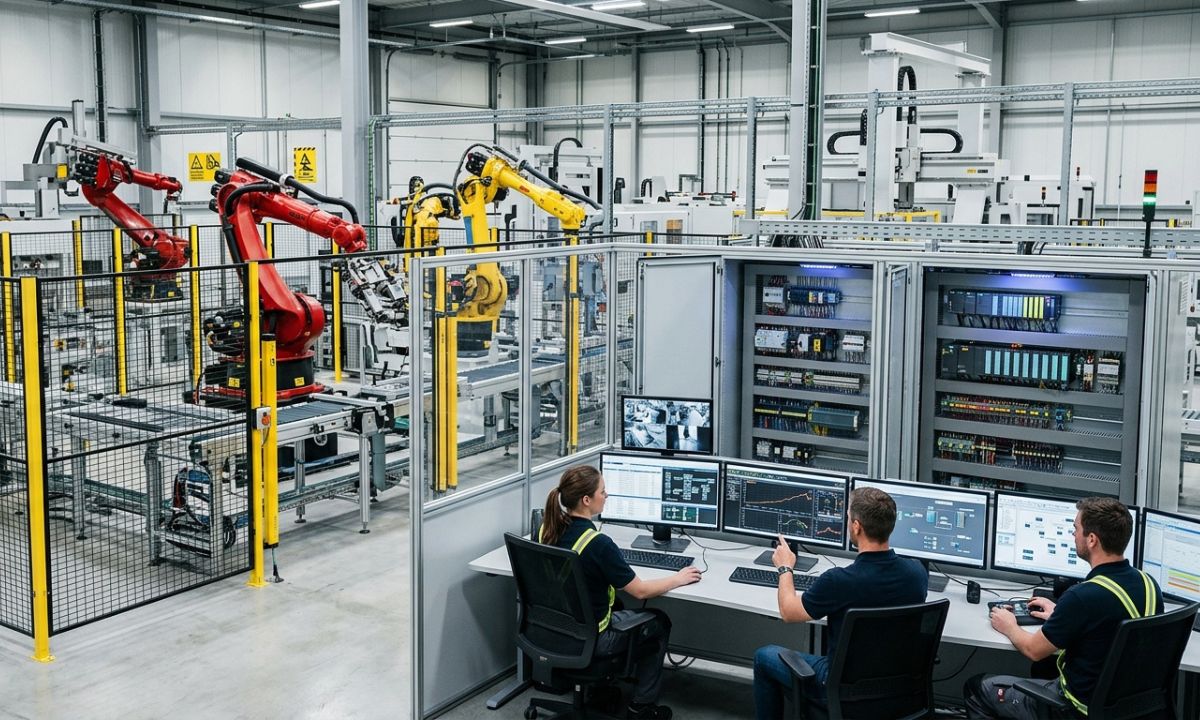
A production line can run thousands of cycles in a day without a problem. Then one small control failure, an outdated safety circuit, or a poorly integrated machine creates a serious interruption.
That is why modern industrial automation is no longer just about making equipment run faster. It is about making systems work together safely, reliably, and intelligently.
This is where machine safety services and control system integration become particularly important. Manufacturers and other industrial operators need more than individual machines with sophisticated controls. They need those machines, safety devices, sensors, software, and production systems to communicate effectively.
A well-designed automation system can improve productivity while also helping reduce operational risk, improve product consistency, modernize aging equipment, and give plant managers better visibility into what is happening on the production floor.
For companies dealing with legacy controls or increasingly complex production requirements, that combination can make a substantial difference.
Table of Contents
- What Are Machine Safety Services?
- Understanding Control System Integration
- Why Machine Safety and Automation Go Together
- Common Problems With Legacy Control Systems
- What a Control System Integrator Actually Does
- Key Benefits of Modern Automation Integration
- Machine Safety Services vs. Traditional Safety Upgrades
- How Pacific Blue Engineering Supports Industrial Automation
- Industries That Can Benefit From Control Integration
- Questions to Ask Before Starting an Automation Project
- Frequently Asked Questions
- Final Thoughts
What Are Machine Safety Services?
Machine safety services are engineering and technical services designed to identify and reduce hazards associated with industrial machinery and automated processes.
These services can involve reviewing existing equipment, identifying potential hazards, evaluating safety controls, and helping businesses implement appropriate protective measures.
Depending on the application, machine safety work may include:
- Safety risk assessments
- Machine guarding evaluation
- Safety circuit design
- Emergency stop systems
- Safety PLC implementation
- Interlocking systems
- Presence sensing devices
- Light curtains and safety scanners
- Safety relay systems
- Control system validation
- Safety documentation
- Machine modernization
The important point is that machine safety isn’t simply about adding an emergency-stop button and calling the job finished.
A machine may be technically functional while still having weaknesses in its safety architecture. For example, an outdated control panel may not communicate properly with newer safety devices. A modified production line may introduce hazards that weren’t present when the original machine was installed.
That’s why safety needs to be considered as part of the complete automation system.
Understanding Control System Integration
Control system integration involves bringing different automation components together so they operate as one coordinated system.
Think about a modern production facility. It may contain programmable logic controllers, variable frequency drives, robots, sensors, HMIs, industrial networks, safety systems, databases, and supervisory software.
If each component works independently, operators may spend unnecessary time troubleshooting problems and collecting information manually.
An experienced control system integrator connects these technologies and develops the control architecture needed for the application.
A typical integration project might include:
- Reviewing the existing process
- Identifying operational requirements
- Developing the control architecture
- Selecting suitable automation hardware
- Programming PLCs and HMIs
- Integrating sensors and field devices
- Connecting safety systems
- Establishing industrial communications
- Testing the system
- Commissioning the equipment
- Training operators and maintenance personnel
The goal isn’t simply to install new technology. The goal is to create a system that solves an actual operational problem.
Why Machine Safety and Automation Go Together
Safety and productivity are sometimes treated as separate objectives. In practice, they often overlap.
Consider a machine that frequently stops because operators have to manually intervene. If the safety and control architecture is poorly designed, diagnosing those stops can become difficult.
A modern integrated system can provide clearer information about what happened and why.
For instance, instead of simply showing that a machine stopped, an HMI might identify a particular safety device, interlock, sensor, or process condition that triggered the shutdown.
That information can shorten troubleshooting time.
It can also help maintenance teams identify recurring issues before they turn into larger production problems.
Honestly, this isn’t talked about enough: good safety engineering can contribute to better operational visibility, not just compliance.
Common Problems With Legacy Control Systems
Many industrial facilities are still operating equipment that was installed years or even decades ago.
There’s nothing inherently wrong with keeping reliable equipment in service. The problem begins when the control technology becomes difficult to maintain or integrate.
Common warning signs include:
Obsolete PLC Hardware
Older PLCs and processors may no longer be supported by their manufacturers. Replacement components can become expensive or difficult to locate.
Limited Data Visibility
Some older systems provide very little useful production data. Operators may know that something went wrong but have limited information about the cause.
Difficult Troubleshooting
Legacy systems may rely heavily on undocumented wiring, outdated programming practices, or components that newer technicians aren’t familiar with.
Inconsistent Safety Architecture
Equipment modifications performed over the years can leave safety systems fragmented or difficult to evaluate as a whole.
Poor Communication Between Machines
Older equipment may not communicate easily with modern manufacturing software, plant networks, or newer automation platforms.
Replacing an entire machine isn’t always the answer.
In many situations, control system modernization can extend the useful life of existing equipment while bringing its controls closer to modern operational standards.
What a Control System Integrator Actually Does
A control system integrator sits between the business problem and the technology used to solve it.
That distinction matters.
A good integrator doesn’t start with, “Which PLC should we install?” The better question is, “What does this process need to accomplish?”
From there, engineers can determine the appropriate hardware, software, networking, safety architecture, and user interface.
An experienced integrator may work on projects involving:
- PLC programming
- HMI development
- SCADA systems
- Industrial networking
- Robotics integration
- Motion control
- Variable frequency drives
- Safety PLCs
- Electrical control panels
- Data collection
- Process automation
- Legacy system modernization
- System commissioning
This approach becomes especially useful when a project involves multiple vendors or generations of equipment.
Someone has to make all those pieces work together.
Key Benefits of Modern Automation Integration
A properly planned automation project can affect much more than machine speed.
Improved Machine Safety
Modern safety systems can help identify hazards and provide controlled responses when unsafe conditions occur.
Better Product Quality
Automation can reduce process variation by controlling important parameters consistently.
Reduced Downtime
When control systems provide better diagnostic information, maintenance teams can often identify problems faster.
Lower Operational Risk
Replacing unsupported components and improving system architecture can reduce some risks associated with aging equipment.
Better Production Data
Integrated systems can collect valuable information about machine status, production rates, faults, energy use, and other operational factors.
Easier Maintenance
Clearer programming, documentation, interfaces, and diagnostics can make systems easier for maintenance teams to understand.
Longer Equipment Life
Modernizing controls may allow an otherwise useful machine to remain productive without replacing the entire mechanical system.
Better Decision-Making
Plant managers can make more informed decisions when reliable production information is available instead of relying entirely on manual observations.
Machine Safety Services vs. Traditional Safety Upgrades
| Traditional Approach | Integrated Machine Safety Approach |
|---|---|
| Focuses mainly on individual safety devices | Considers the complete machine and control architecture |
| Often reactive | Can be based on systematic risk assessment |
| Limited diagnostic information | Better fault and status visibility |
| May rely heavily on standalone components | Can integrate safety PLCs and control systems |
| May address one machine at a time | Can consider connected production processes |
| Documentation may be limited | Documentation and validation can be built into the project |
This doesn’t mean every facility needs the most sophisticated safety technology available.
Quite the opposite.
The right solution depends on the machine, process, hazards, operating environment, and business requirements.
How Pacific Blue Engineering Supports Industrial Automation
Pacific Blue Engineering is an example of an engineering company focused on control system integration and industrial automation.
Its work covers tailored automation solutions designed around the specific requirements of industrial operations rather than forcing every customer into the same technology package.
That distinction is important because no two production environments are exactly alike.
A manufacturing plant may need to modernize legacy controls while maintaining existing equipment. A food and beverage operation may have different process, sanitation, and production requirements. A life sciences facility can have its own demanding automation and documentation considerations.
Pacific Blue Engineering provides control system integration services across industries including manufacturing, food and beverage, life sciences, entertainment, and transportation.
Its engineering approach can help businesses address several common industrial challenges, including:
- Modernizing legacy control systems
- Improving machine safety
- Optimizing production processes
- Enhancing product quality
- Reducing operational risk
- Integrating automation technologies
- Improving access to operational information
The value of this type of engineering work isn’t limited to the initial installation.
A well-designed system should also make sense five or ten years later when someone needs to troubleshoot a sensor, modify a process, replace a component, or understand why a machine stopped.
That’s where thoughtful systems engineering earns its keep.
Industries That Can Benefit From Control Integration
Manufacturing
Manufacturers often need to balance throughput, quality, safety, and equipment availability. Integrated controls can help coordinate machines and provide better information about production performance.
Food and Beverage
Food and beverage facilities depend heavily on consistent processes. Automation can help control production parameters while improving visibility into equipment and process conditions.
Life Sciences
Life sciences operations can involve complex processes where consistency, traceability, and reliable automation are particularly important.
Entertainment
Entertainment facilities can use sophisticated automation and control systems for equipment, attractions, specialized machinery, and operational processes.
Transportation
Transportation environments may involve complex mechanical and electrical systems that require reliable monitoring, control, and integration.
The technologies differ between these industries, but the underlying principle remains similar: connect the right systems and make them work together reliably.
Questions to Ask Before Starting an Automation Project
Before selecting an integrator or beginning a major controls upgrade, ask a few practical questions.
What problem are we actually trying to solve?
Is the issue downtime, obsolete controls, poor data visibility, safety concerns, inconsistent quality, or something else?
Can the existing equipment be modernized?
Full replacement may not be necessary. A controls upgrade could potentially provide many of the required improvements.
How will the new system interact with existing equipment?
Integration planning is particularly important when old and new technologies need to coexist.
What information do operators need?
A technically impressive system isn’t very useful if operators can’t quickly understand what the HMI is telling them.
What happens after commissioning?
Ask about documentation, training, troubleshooting support, system maintenance, and future modifications.
How will safety be addressed?
Safety should be considered from the beginning of the project rather than treated as an afterthought.
Frequently Asked Questions
What are machine safety services?
Machine safety services help businesses identify machinery hazards and implement engineering controls and safety systems designed to reduce risk. They can include risk assessments, safety circuits, guarding evaluations, safety PLCs, interlocks, and validation.
What is control system integration?
Control system integration is the process of connecting automation hardware, software, machines, sensors, networks, and other technologies so they operate as a coordinated system.
Why modernize a legacy control system?
Legacy controls can become difficult to support, troubleshoot, or connect with modern technologies. Modernization can improve reliability, diagnostics, safety integration, data visibility, and maintainability while potentially extending the life of existing equipment.
Does automation improve machine safety?
Automation can support machine safety by integrating safety devices, monitoring hazardous conditions, and providing controlled responses. The appropriate solution depends on the specific machine, hazards, and risk assessment.
Can an integrator work with existing equipment?
Yes. Control system integrators often work with existing machinery and legacy controls. Depending on the equipment and project goals, modernization may involve replacing selected control components while retaining useful mechanical systems.
What industries use control system integration?
Control system integration is used across many sectors, including manufacturing, food and beverage, life sciences, transportation, entertainment, energy, and other industrial environments.
How can automation improve product quality?
Automation can reduce process variation by controlling equipment and process parameters consistently. Better monitoring and data collection can also help identify deviations earlier.
Final Thoughts
Industrial automation isn’t simply a race toward newer technology.
The real objective is more practical: safer equipment, dependable processes, useful information, and systems that make sense for the people who operate and maintain them.
That’s why machine safety services and control system integration should be considered together when businesses modernize industrial operations. A control system that runs efficiently but provides poor safety or visibility isn’t a complete solution.
Likewise, adding safety equipment without considering how the overall automation architecture works can leave valuable opportunities on the table.
Companies such as Pacific Blue Engineering demonstrate how systems engineering and automation technologies can be brought together to address those challenges across different industrial environments.
The next step for a facility considering modernization is often surprisingly simple: identify the machines, processes, or controls causing the most friction today. From there, a properly scoped engineering assessment can reveal what should be upgraded, what can stay, and where automation can deliver the greatest practical value.
-

 Education2 years ago
Mastering Excel: Your Comprehensive Guide To Spreadsheets And Data Analysis
-

 Tech2 years ago
How To Choose The Best Forex Trading Broker?
-

 Business2 years ago
Exploring the Rental Market: Properties for Rent in Malta
-

 Blog2 years ago
Arab MMA Fighters Shine Bright: Meet the Champions of PFL MENA
-

 Tech2 years ago
The Role Of Experts VS Top Mobile Apps for Green Screen Removal
-

 Travel2 years ago
Experience the Best Desert Safari Dubai Offers!
-

 Home Improvement3 years ago
Eco-Friendly Round Rug Options for Sustainable Living in NZ
-

 Tech2 years ago
Finding Unique Products and Deals on Social Media Marketplaces