
Business
All-in-One Desktop Computers: The Evolution of Computing

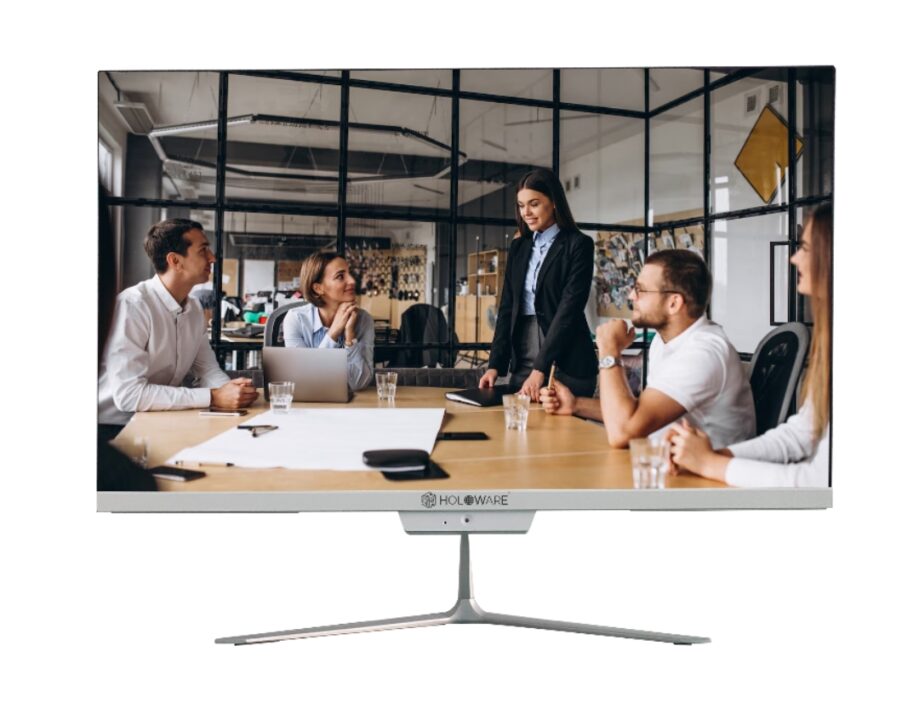
The all-in-one desktop computer has emerged as a transformative innovation, offering a blend of power, elegance, and efficiency. Combining the computing power of traditional desktops with a sleek, integrated design, all-in-one desktops eliminate the need for a separate tower unit. This integration results in a streamlined, clutter-free workspace that appeals to both home users and professionals. Discover the numerous benefits and advanced features of Holoware’s all-in-one desktop computers and explore why they stand out as a top choice for users needs.
First, why Choose an All-in-One Desktop Computer?
The all-in-one desktop computer has become increasingly popular due to its space-saving design and simplicity. By consolidating the monitor and computer components into a single unit, these devices reduce cable clutter and save valuable desk space. This design is particularly beneficial for smaller workspaces, where every inch counts. Moreover, the minimalist aesthetic of an all-in-one desktop computer can enhance the visual appeal of any environment, from home offices to corporate settings.
Key Features of All-in-One Desktop Computers
When selecting the best all-in-one desktop computer, several features should be considered to ensure you get the most out of your investment:
- Performance and Processing Power
All-in-one computers come equipped with powerful processors that cater to a range of needs. Whether you require an Intel Core i3 for basic tasks or a high-end Intel Core i7 for more demanding applications, these devices offer robust performance. For example, the Holoware all-in-one desktop computer features options such as the Intel Core i3 12100, i5 12400, and i7 12700, providing users with flexible performance choices.
- Stunning Display
A key selling point of all-in-one desktop computers is their impressive displays. With sizes up to 27 inches and resolutions up to 2560×1440, these screens deliver vibrant visuals and crisp details. The Holoware all-in-one desktop computer, for instance, offers an FHD IPS display with 100% sRGB coverage, making it ideal for both professional and personal use.
- Compact and Stylish Design
The compact form factor of all-in-ones contributes to a cleaner, more organized workspace. With dimensions that allow it to fit seamlessly into various environments, the Holoware all-in-one desktop computer combines functionality with a sleek, modern aesthetic. Its plastic casing and elegant color options ensure it complements any decor.
- Enhanced Connectivity and Portability
Modern all-in-ones are equipped with a range of connectivity options, including USB ports, HDMI, and Type-C ports. The Holoware all-in-one desktop computer excels in this area, offering multiple ports and optional Wi-Fi 6 and Bluetooth 5.2 for seamless connectivity. Additionally, the optional 50Wh battery adds a layer of portability, allowing users to move the device within their workspace or use it in different locations without being tethered to a power outlet.
Why Holoware’s All-in-One Desktop Computer Stands Out
When it comes to choosing a desktop computer that marries style with substance, the Holoware all-in-one desktop computer rises to the top. Here’s a detailed look at what makes the Holoware all-in-one desktop computer a superior choice in today’s market.
Performance That Packs a Punch
The Holoware all-in-one desktop computer is not just a pretty face; it’s a performance powerhouse. Equipped with a range of Intel processors, including the Intel Core i3 12100, i5 12400, and i7 12700, this all-in-one handles everything from routine tasks to intensive applications with ease. The i3 model offers a robust base clock of 3.3GHz, boosting up to 4.3GHz, while the i5 and i7 models take performance even further with base clocks of 2.5GHz and 2.1GHz, respectively, and maximum boosts up to 4.4GHz and 4.9GHz.
The integrated Intel UHD Graphics ensure that visual performance is crisp and clear, whether you’re working on documents or enjoying multimedia content. This device supports up to 32GB of DDR4 RAM, providing ample memory for multitasking and heavy-duty applications.
Storage and Design
Storage flexibility is another highlight of the Holoware all-in-one. It comes with a minimum of 512GB NVMe M.2 SSD, with expandable options up to 2TB SATA SSD or 2TB NVMe SSD, catering to both current needs and future growth. This makes it easy to store large files, multimedia, and software without worrying about running out of space.
In terms of design, the Holoware all-in-one desktop computer is a sleek and modern addition to any workspace. With a display size of up to 27 inches and FHD IPS technology providing 100% sRGB coverage, it supports resolutions of 1920×1080 or 2560×1440, delivering vibrant and accurate colors perfect for both professional and personal use. The plastic casing and compact dimensions (29.3 cm x 15 cm x 38.8 cm) ensure that it blends seamlessly into any environment while being easy to move if needed. Weighing in at just 5.2 kg, it’s a lightweight option that doesn’t sacrifice screen real estate or performance.
Connectivity and Media
Connectivity is key for a versatile all-in-one, and Holoware delivers with a range of ports and options. Users can enjoy various configurations of USB ports, HDMI, VGA, and even a Type-C port in some models. The inclusion of Wi-Fi 6 (802.11ax) and Bluetooth 5.2 (optional) ensures fast and reliable wireless connections.
For media, the built-in stereo speakers (3W x 4 Ohm) and a 3 MP camera with an optional pop-up design enhance both audio and visual experiences. The digital microphone (D-MIC) adds superior clarity to your audio, whether you’re in video conferences or recording content. Additionally, the optional 50Wh battery offers flexibility, making it possible to use the all-in-one desktop without being tethered to a power outlet.
Software and Security
The Holoware all-in-one desktop comes pre-installed with Windows 11 Pro, ensuring a modern and secure operating environment. Bundled software includes Protegent antivirus and optional Microsoft Office suites (Home and Student 2021, Standard 2021, or Professional 2021), enhancing productivity right out of the box.Security features are robust, with a DTPM chip and BIOS Administrator and User Password Protection to keep your data safe.
Post-Sales Support and Customization
Holoware is dedicated to ensuring a seamless experience long after your purchase. Their commitment to quality and customer satisfaction is reflected in their extensive support and customization options.
Commitment to Quality: Holoware distinguishes itself with a commitment to excellence and customer care. They hold a range of certifications including ISO 9001 for quality management, BEE (Bureau of Energy Efficiency) for energy efficiency, BIS (Bureau of Indian Standards) for product safety, and ROHS (Restriction of Hazardous Substances) for environmental compliance. These certifications ensure that you receive products that meet the highest standards.
Comprehensive Customer Care: Holoware offers a standard 3-year onsite warranty for All-in-One Desktop Computers. Their support network spans over 21,000 pin codes across India, providing prompt assistance through both remote support and on-site visits when needed. For hardware issues, Holoware provides a pick-up and drop-off service, minimizing downtime and ensuring swift repairs.
Remote Support: When a visit to a service center isn’t necessary, Holoware’s remote support team offers efficient troubleshooting and assistance directly from your workspace. All software issues are addressed within one hour of being raised.
Flexible Payment Plans: Holoware understands the importance of affordability. They offer various payment solutions including EMI plans, short-term rentals, and bulk order discounts. This flexibility allows you to acquire high-performance technology while managing your budget effectively.
Customization Options: Tailoring your computer to your specific needs is a priority at Holoware. Their team works closely with you to customize the device’s hardware configurations, ensuring that it meets your exact requirements. Whether for professional tasks, gaming, or general use, Holoware’s personalized approach ensures that you receive a product perfectly suited to your needs.
For more information or assistance, visit holoware.co or contact us at marketing@holoware.co. A dedicated team is available Monday through Saturday, from 10 AM to 7 PM IST, to help you with any inquiries or support you may need.

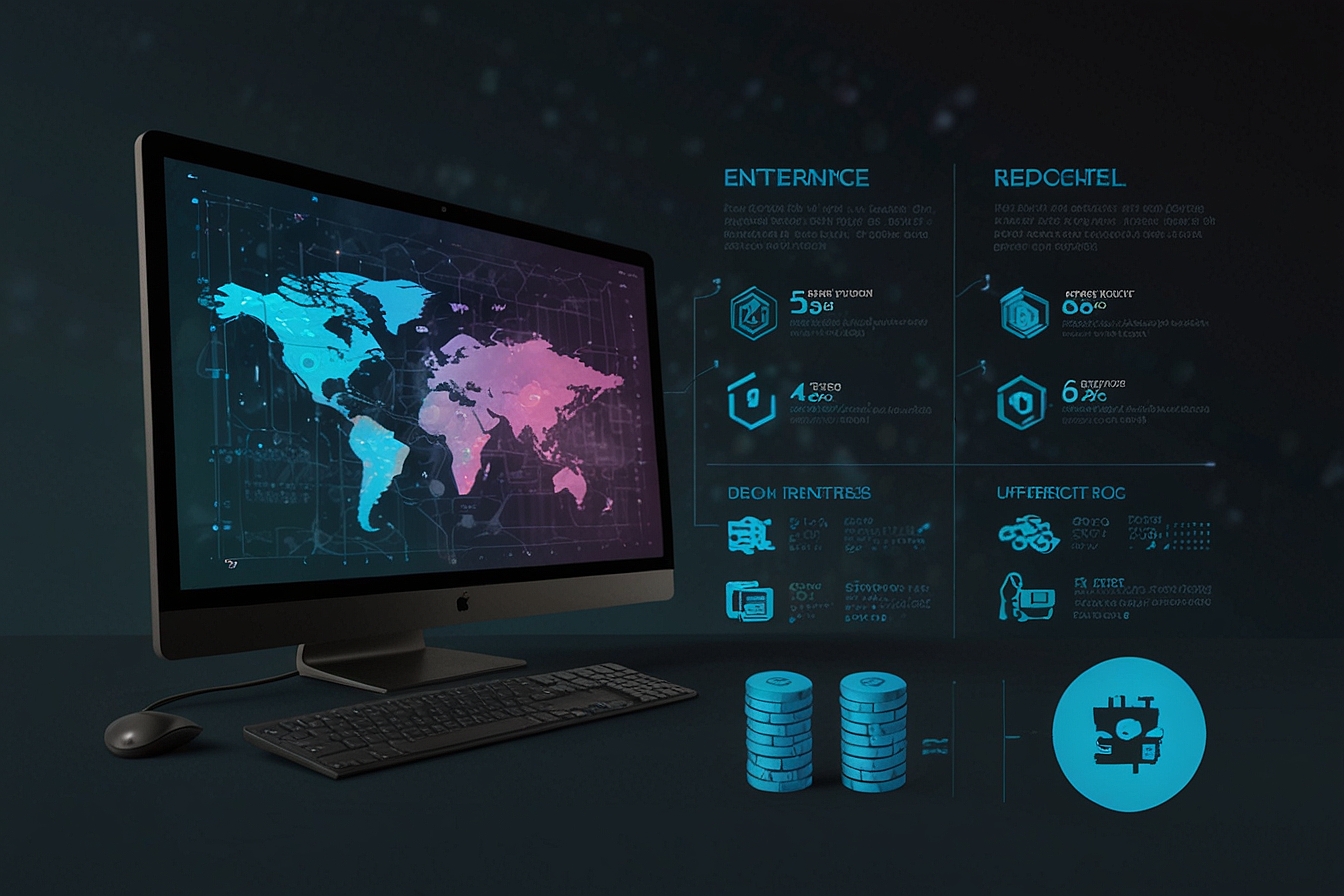
Most leaders I talk to still underestimate just how fast the data flood is rising. By the end of 2025 the world had already generated 181 zettabytes of information, and forecasts point toward 221 zettabytes in 2026 alone. That is not some abstract number. It is the equivalent of every person on Earth streaming high-definition video nonstop for months. Yet here is the kicker: most companies are still processing that deluge the same way they did five years ago, in slow overnight batches that leave decision-makers waiting and AI models starving for fresh fuel.
This is precisely where Data Engineering & Strategy steps in and changes the game. It is not just about moving bits from point A to point B anymore. It is about designing autonomous, real-time pipelines and cloud-native architectures that transform raw data into a genuine competitive edge. When done right, these systems do not merely support AI. They become the foundation that lets AI deliver measurable return on investment, day after day.
In the sections ahead we will walk through why this matters now more than ever, what the core building blocks look like, and how you can actually put these ideas to work without the usual headaches. Along the way I will share a few hard-earned lessons from projects I have led and one quick comparison table that tends to spark “aha” moments for teams. Let us dive in.
Table of Contents
- The Growing Importance of Data Engineering & Strategy in Today’s AI Landscape
- Core Elements of Effective Data Engineering & Strategy
- Designing Scalable and Autonomous Data Pipelines
- Real-Time Data Processing: Moving Beyond Batch Jobs
- Embracing Cloud-Native Architectures for Flexibility and Scale
- Strategies to Maximize ROI from Your Data Investments
- Common Pitfalls and How to Avoid Them
- Frequently Asked Questions
The Growing Importance of Data Engineering & Strategy in Today’s AI Landscape
You have probably heard the stat that 80 percent of AI project time goes into data preparation. What fewer people admit out loud is that poor data engineering is still the number-one reason those projects fail to deliver ROI. When pipelines break, latency creeps in, or quality slips, even the fanciest large language model becomes useless.
Data Engineering & Strategy bridges that gap. It treats data as a product rather than a byproduct. Teams that adopt this mindset see faster model training, more accurate predictions, and, crucially, the ability to act on insights while they are still relevant. Think fraud detection that flags suspicious transactions in seconds instead of hours, or recommendation engines that update in real time as shoppers browse.
The market numbers back this up. Data integration spending alone is projected to climb from roughly $15 billion in 2026 to more than $30 billion by 2030. Streaming analytics is growing even faster. Organizations investing here are not just keeping up. They are pulling ahead because their data infrastructure finally matches the speed of their business ambition.
Core Elements of Effective Data Engineering & Strategy
At its heart, solid Data Engineering & Strategy rests on five pillars that work together like a well-oiled machine.
First comes ingestion. Whether you are pulling structured sales records from a CRM or unstructured sensor logs from IoT devices, the pipeline must handle variety without choking. Modern tools let you ingest at scale while automatically retrying failed connections.
Next is transformation. This is where raw data turns into something usable. ELT (extract, load, transform) patterns have largely replaced the older ETL approach because they let you land everything first and then shape it on demand. That flexibility pays off when business rules change overnight.
Storage follows. Gone are the days of forcing everything into a single relational database. Smart teams now combine data lakes for raw volume, warehouses for structured analytics, and feature stores for AI-specific needs. The trick is making sure these layers talk to each other seamlessly.
Orchestration keeps the whole show running. Tools that let you define workflows as code mean you can version-control your pipelines just like your application code. When something fails, you know exactly why and can roll back cleanly.
Finally, governance and quality sit on top like the safety net. Automated checks for completeness, freshness, and accuracy prevent “garbage in, garbage out” scenarios that have doomed more AI initiatives than anyone cares to count.
Designing Scalable and Autonomous Data Pipelines
Scalability is not an afterthought. It has to be baked in from day one. That means designing for horizontal growth so that when your data volume doubles (and it will), your system simply spins up more resources without a rewrite.
Autonomous pipelines take this a step further. They monitor themselves, detect anomalies, and even trigger corrective actions. Imagine a pipeline that notices a sudden spike in malformed records and automatically routes them to a quarantine area while alerting the team through Slack. No more weekend emergency calls.
One technique that has worked well in my experience is event-driven architecture paired with serverless components. You pay only for what you use, and the system scales to zero when idle. For always-on needs, containerized microservices orchestrated by Kubernetes provide the resilience without the management overhead.
Real-Time Data Processing: Moving Beyond Batch Jobs
Here is a question I get asked all the time: do we really need real-time everything? The honest answer is no, but you do need it for the use cases that matter most.
Batch processing still shines for heavy analytical jobs that run overnight. It is cost-effective and simpler to debug. Real-time streaming, on the other hand, shines when milliseconds count: personalized pricing, live inventory updates, or immediate customer support routing.
To make the choice clearer, consider this quick comparison:
| Aspect | Batch Processing | Real-Time Streaming |
|---|---|---|
| Latency | Hours to minutes | Milliseconds to seconds |
| Cost Efficiency | High (run during off-peak) | Higher during peak but optimized with auto-scaling |
| Complexity | Lower | Higher (needs state management) |
| Use Cases | Monthly reports, model retraining | Fraud detection, live recommendations |
| Error Handling | Easier retries on full datasets | Requires careful deduplication |
| Best For | Stable, predictable workloads | Dynamic, event-driven business needs |
Hybrid setups often win. Stream the critical events and batch the rest. You get the best of both worlds without breaking the bank.
Embracing Cloud-Native Architectures for Flexibility and Scale
Cloud-native is not just marketing speak. It is a fundamental shift in how you think about infrastructure. Instead of managing servers, you declare what you want and let the platform handle the rest.
Key practices that deliver results include infrastructure as code (so every change is auditable), containerization for portability, and decoupled storage from compute so you can scale each independently. Services like managed Kafka for streaming or serverless query engines let teams focus on business logic rather than babysitting clusters.
The payoff? Your data architecture can expand across regions, survive outages, and adapt to new AI tools without months of migration work. In one project we migrated a legacy on-prem setup to a cloud-native stack and cut monthly costs by 40 percent while improving uptime to 99.99 percent. That kind of result tends to quiet even the most skeptical CFO.
Strategies to Maximize ROI from Your Data Investments
The best Data Engineering & Strategy always ties back to business outcomes. Start with clear success metrics: reduced time-to-insight, lower operational costs, or higher model accuracy. Then align every technical decision to those goals.
Invest in observability early. Dashboards that show end-to-end pipeline health prevent small issues from snowballing into outages. Automated testing for data quality catches problems before they reach downstream AI models.
Another lever is cross-team collaboration. Data engineers, data scientists, and business stakeholders should speak the same language from the outset. When everyone understands the pipeline’s purpose, prioritization becomes straightforward.
Finally, treat your pipelines as living products. Schedule regular reviews, retire outdated jobs, and keep an eye on emerging tools. The field moves fast, and yesterday’s cutting-edge solution can become tomorrow’s maintenance burden.
Common Pitfalls and How to Avoid Them
Even experienced teams stumble. The biggest trap is underestimating data volume growth. What works in a proof of concept often collapses under production load. Solution? Design for at least 10x headroom and test with synthetic spikes.
Another common mistake is neglecting governance until it is too late. Retroactively adding compliance checks is painful. Build them in from the first sprint.
Cost surprises also sneak up. Real-time streaming can rack up bills if not monitored. Set budgets and alerts, and review usage monthly.
Last but not least, avoid the “build everything ourselves” temptation. Leverage managed services for commodity tasks and reserve in-house talent for your unique competitive advantage.
Frequently Asked Questions
What exactly is Data Engineering & Strategy?
It is the disciplined approach to building and maintaining the data infrastructure that powers analytics and AI. Unlike pure data engineering, the strategy piece ensures every pipeline serves clear business objectives and remains adaptable as needs evolve.
How long does it take to build scalable AI-ready pipelines?
It depends on your starting point. A well-planned greenfield project can deliver an MVP in 8 to 12 weeks. Legacy modernization usually takes longer because of the need to migrate historical data without downtime.
Do small companies need cloud-native architectures?
Yes, actually. Cloud-native options remove upfront hardware costs and let you start small and grow. Many startups begin with serverless components and only add orchestration layers as complexity increases.
What is the difference between batch and real-time pipelines?
Batch pipelines process data in scheduled chunks, which is efficient for non-urgent tasks. Real-time pipelines handle data continuously, enabling instant insights but requiring more sophisticated error handling and state management.
How does data quality impact AI performance?
Garbage data leads to unreliable models. Even a small percentage of bad records can skew predictions dramatically. Automated validation and lineage tracking keep quality high and give you confidence in AI outputs.
Can we make existing pipelines autonomous?
Absolutely. Start by adding monitoring, then layer in automated retries and self-healing logic. Many teams achieve noticeable autonomy within a single quarter.
What ROI can we realistically expect?
Organizations that invest properly often see 3x to 5x returns within 12 to 18 months through faster decisions, reduced manual work, and new revenue streams from data products.
Wrapping Up: Your Next Move in Data Engineering & Strategy
Look, the data explosion is not slowing down. If your pipelines still rely on yesterday’s thinking, you are leaving money and opportunity on the table. The good news is that building scalable AI-ready systems no longer requires a massive upfront overhaul. With the right Data Engineering & Strategy, you can start delivering value quickly and keep improving from there.
The companies pulling ahead right now are the ones treating data infrastructure as a strategic asset rather than a cost center. They invest in autonomy, embrace real-time where it counts, and design for the cloud-native world we all live in.
So here is my question for you: what is one pipeline or process in your organization that feels painfully slow or brittle today? Fixing that single bottleneck could be the spark that turns your raw data into the competitive edge you have been chasing. If you would like a fresh set of eyes on your current setup, drop us a note. We have helped teams just like yours move from data chaos to AI-powered clarity, and we would be happy to do the same for you. The future of your data is waiting.
You may also like: What is AI TRiSM? The Complete Guide to AI Trust & Security (2026)

When it comes to the luxury real estate market of Southwest Florida, standing out is a considerable feat. Janet Berry Luxury Home Team has not only managed to stand out; they’ve carved out a niche as one of the region’s most reputable real estate services. Catering to the most discerning clientele, Janet Berry’s team does not merely sell properties—they curate experiences and help you find a slice of paradise that resonates with your personal vision and lifestyle. Join us as we explore the inner workings of this top-tier real estate enterprise in a region as stunning and sought-after as the properties they represent.
With a focus on the most opulent listings in the area, Janet Berry’s website has become a digital oasis for home buyers and investors with an eye for luxury. Their strong presence in the market, particularly in golf communities, and high-end neighborhoods like Pelican Bay and Old Naples, signifies a team that understands the subtleties of this sophisticated market. Their dedication to personalized service combined with state-of-the-art technology has set them apart as leaders, guiding clients through the process of buying and selling with expertise and ease.
A Showcase of Exclusivity: Janet Berry’s Luxury List
One cannot mention Janet Berry Home Team without marveling at their collection of luxury properties. These homes aren’t just buildings; they’re statements, they’re art, and they’re dream homes come to life. The team’s website is a virtual gallery of the most distinctive homes in Southwest Florida where oceanfront estates meet sprawling golf course villas. From the quaint streets of Port Royal to the modernist spaces of Aqualane Shores, each property listed is a testament to the team’s acute understanding of what luxury means to their clientele.
But what truly sets Janet Berry’s portfolio apart is the intimate knowledge each listing exudes. The video tours, the stunning professional photographs, and meticulously crafted descriptions provide a deep sense of the property’s essence. Each listed home is not just depicted; it is understood, with features highlighted to match the specific needs of potential buyers, from state-of-the-art kitchens to panoramic views of the Gulf of Mexico. This mastery of digital presentation makes the Janet Berry website an essential stop for anyone looking to satiate their luxury real estate cravings.
The Heart of the Team: Personalized Service and Expertise
At the core of every successful real estate team are its people, and Janet Berry’s team is no exception. Led by Janet Berry herself, the team is renowned for its dedication to each client’s unique needs, offering a personalized experience that is second to none. Their expertise is as vast as the horizon that meets the Gulf, with an in-house team of real estate professionals who collectively capture the essence of the luxury market. From market analysts to real estate lawyers, their team is a comprehensive unit ensuring that every transaction is as smooth as it is lucrative.
Understanding the paradigms of luxury real estate and the impact of local regulations on the market, Janet Berry’s team goes beyond the transaction. They provide insights and advice backed by years of experience, ensuring that clients make informed decisions. This dedication to expertise coupled with their commitment to personalized service is what fosters loyalty among their client base and keeps them coming back for their real estate needs.
The Technology Advantage: Real-Time Market Updates and Tools
Janet Berry Home Team fully understands that in the digital age, knowledge is power, and they arm their clients with the latest tools. Their website offers real-time market updates, insights into the current trends, and easy-to-use tools to track property valuation and sales history. For the tech-savvy luxury buyer or seller who demands the most current information, Janet Berry’s strategy puts them decisively ahead.
Their use of technology extends beyond the web presence. The team employs the latest in real estate software to streamline the buying and selling processes, making transactions more efficient and transparent. This commitment to technology integration makes the Janet Berry Home Team approach not only forward-thinking but also exceptionally client-oriented.
A Niche Within a Niche: Focusing on Golf Communities and Prestigious Neighbourhoods
Southwest Florida is dotted with prestigious communities, and Janet Berry’s team has secured a leading position in marketing these properties. Golf communities are a particular focus, given the region’s reputation as a golfer’s paradise. The team’s expertise in these specialized markets, including the intricacies of club memberships and property values, ensures they can find the perfect fairway home or help you sell one with unquestionable finesse.
Whether it’s a contemporary masterpiece in Pelican Bay or a historic home in Old Naples, Janet Berry’s team is well-versed in the unique features that define these sought-after locales. By understanding the nuances of each neighborhood and its market trajectory, the team is an invaluable ally for anyone looking to buy or sell in these exclusive areas.
Connecting Buyers with their Dreams
For luxury home seekers, the process of finding the perfect retreat can be overwhelming. Janet Berry Home Team works to turn the overwhelming into the inspiring. Whether you’re on the hunt for a waterfront villa, a private island estate, or a penthouse in the sky, the team’s commitment to understanding their client’s dream enables them to connect on a deeper level.
They don’t just show homes; they show potential futures. They understand that each square footage tells a story of a life well lived, a family gathered, or a sunset enjoyed. This level of empathy combined with their professional acumen makes Janet Berry’s team adept at finding not just any home, but the home that resonates with your soul.
You Might Also Like: Unlock Potential: Explore Pikruos Services
Conclusion: The Luxury Real Estate Journey With Janet Berry Home Team
The Janet Berry Home Team’s approach to luxury real estate is a marriage of art and precision. They curate experiences that go beyond a simple transaction, ensuring that the process of acquiring a luxury property is as beautiful and fulfilling as the property itself. Their strategic blend of personalized service, expertise, and technology has set them apart in Southwest Florida’s bustling real estate market. For anyone looking to sell or invest in luxury real estate, Janet Berry Home Team’s website is a treasure trove, and their team, a beacon of knowledge and trust in the luxury real estate landscape of Southwest Florida.
If you are ready to take the next step in your luxury real estate endeavor, Janet Berry Home Team is poised to guide you through with grace and excellence. Welcome to the world of South Florida’s premier luxury real estate services – where each client is treated like family, and every property is a work of art that’s just waiting for the perfect connoisseur to call it home.

Long-distance office relocations require careful planning, logistics, and coordination. As with planning any event, mistakes are unavoidable, and in this case even minor errors can escalate into major problems that are difficult or costly to fix once the move is underway.
While many challenges are inherent to moving operations, several mistakes can be prevented through careful preparation and professional oversight https://bestmovescalgary.ca/long-distance-moving-services/. To better prepare for the relocation it is better to keep in mind these avoidable mistakes:
- Failing to catalog office equipment, furniture, and supplies accurately can result in lost items, missing parts, or duplicate shipments. This issue is particularly problematic when sensitive technology, specialized furniture, or essential documents are involved. Creating a complete, detailed inventory before the move allows movers and managers to track every item, reducing the risk of permanent loss or replacement costs.
- Computers, servers, and audiovisual equipment should be packed properly as they are highly sensitive to shock, temperature fluctuations, and moisture. Using inappropriate packing materials or skipping protective measures can result in hardware failure, data loss, or costly repairs. Professional movers mitigate these risks by supplying specialized crates, anti-static packaging, and cushioning techniques designed specifically for delicate office technology.
- Disorganization of critical documents also presents major challenges. Legal files, financial records, and personnel information often require secure, labeled, and traceable transport. Failing to properly classify and store these documents can result in misplaced documents, unauthorized access, or delays in reestablishing operational functionality. Advance planning, including the use of secure containers and digital tracking systems, can help prevent these issues entirely.
- Long-distance moves often require navigating unfamiliar highways, bridges, and urban streets. Trucks may encounter low clearance, narrow passages, or weight restrictions. Without pre-assessment and route optimization, vehicles may be delayed or forced to take a different route, which adds time and cost. Selecting a route based on truck dimensions and traffic patterns is a preventive measure that avoids such complications.
- Errors in furniture disassembly and reassembly are also difficult to rectify. Modular office furniture, cubicles, and conference tables require proper disassembly to prevent structural damage. Incorrect handling may result in warped panels, stripped screws, or compromised stability. Documented procedures and professional handling ensure that items arrive intact and operational at the new location quickly.
- Office relocations can disrupt workflows if insufficient time is allocated for unloading, setting up, and reconnecting technology. Misjudging these timelines can delay business operations for days. To prevent this, detailed scheduling, staged planning, and coordination with movers are required to maintain operational continuity.
Each of these mistakes is largely preventable through foresight, preparation, and the expertise of professional movers. Addressing these issues in advance ensures a smoother, safer, and more efficient long-distance office relocation.
READ ALSO: Moving Services in Melbourne: A Comprehensive Guide
-

 Education1 year ago
Mastering Excel: Your Comprehensive Guide To Spreadsheets And Data Analysis
-

 Tech1 year ago
How To Choose The Best Forex Trading Broker?
-

 Business2 years ago
Exploring the Rental Market: Properties for Rent in Malta
-

 Blog1 year ago
Arab MMA Fighters Shine Bright: Meet the Champions of PFL MENA
-

 Travel2 years ago
Experience the Best Desert Safari Dubai Offers!
-

 Home Improvement2 years ago
Eco-Friendly Round Rug Options for Sustainable Living in NZ
-

 How-To Guides2 years ago
Comprehensive Guide to Cockwarming: Enhancing Intimacy and Connection
-

 Fashion2 years ago
Black Magic: The Elegance and Sophistication of Ultimate Homecoming Dresses in Black