
Tech
DC Fast Chargers: Revolutionizing the EV Charging Experience


The shift toward electric powered motors (EVs) is accelerating as issues concerning climate change and the need for sustainable electricity solutions grow to be more urgent. One important issue influencing the adoption of EVs is the supply and performance of charging infrastructure. Among the various forms of chargers to be had, DC speedy chargers stand out as a sport-changer, notably improving the EV charging experience. This article delves into how DC rapid chargers are revolutionizing the EV charging landscape.
Understanding DC Fast Chargers
Direct Current (DC) rapid chargers are excessive-powered chargers which could top off an electric powered car’s battery a great deal quicker than traditional Alternating Current (AC) chargers. Typically, DC speedy chargers can offer eighty% of an EV’s charge in as low as 20 to 30 minutes. This is a stark assessment to Level 1 and Level 2 chargers, which can take numerous hours to absolutely fee a vehicle.
How DC Fast Chargers Work
DC fast chargers bypass the car’s onboard charger to without delays deliver DC strength to the battery. This method is inherently faster as it skips the AC-to-DC conversion manner, that’s both time-consuming and less efficient. The energy output of DC rapid chargers normally ranges from 50 kW to 350 kW, with higher-stop fashions continuously pushing the bounds of charging speed.
Benefits of DC Fast Chargers
1. Reduced Charging Time
The maximum significant benefit of DC speedy chargers is the significantly decreased charging time. For busy people and fleet operators, the ability to fast recharge their vehicles translates into extra comfort and productivity. It makes lengthy-distance journeys more possible, decreasing the “variety tension” that frequently accompanies the use of EVs.
2. Enhanced Convenience
With more DC speedy chargers being installed at strategic locations which include highways, buying centers, and urban hubs, EV owners can experience extra flexibility and freedom. This considerable availability makes it less difficult for users to include EV charging into their daily workouts without important disruptions.
3. Support for High-Capacity Batteries
As the EV era advances, newer fashions are geared up with higher-capacity batteries that require more powerful chargers to optimize their performance. DC rapid chargers are able to meet these demands, ensuring that the ultra-modern EVs may be charged quickly and correctly.
4. Boosting EV Adoption
The availability of rapid, dependable charging alternatives is a key element in encouraging more human beings to switch to electric powered automobiles. By addressing one of the predominant worries of potential EV shoppers—charging time—DC fast chargers assist power the adoption of cleaner, greener transportation.
Challenges and Considerations
While DC rapid chargers provide several benefits, there are also a few challenges and concerns to preserve in mind.
1. Cost and Infrastructure
Installing DC speedy chargers is a good sized investment. The price of the equipment, set up, and vital enhancements to the electric grid can be sizable. However, as era advances and economies of scale come into play, those costs are expected to decrease over the years.
2. Grid Demand
The high electricity output of DC rapid chargers can position a pressure on the electrical grid, specifically all through peak utilization times. To mitigate this, it’s vital to integrate smart grid technologies and expand strategies for green energy control.
3. Compatibility
Not all EVs are compatible with all styles of DC rapid chargers. Different automakers may use distinctive charging requirements, such as CHAdeMO, CCS, or Tesla Superchargers. Ensuring compatibility and interoperability between chargers and cars is crucial for the huge adoption of DC speedy charging.
The Future of DC Fast Charging
The destiny of DC fast charging appears promising, with continuous advancements in era and infrastructure. Here are some traits to watch:
1. Higher Charging Speeds
As battery generation improves, we are able to assume even quicker charging speeds. Companies are growing ultra-speedy chargers with energy outputs exceeding 350 kW, able to deliver a complete price in mere minutes.
2. Wireless Charging
Research and improvement in wireless charging generation may want to similarly revolutionize the EV charging revel in. Imagine driving right into a parking spot and having your car routinely charged without the want for cables or connectors.
3. Integration with Renewable Energy
To create a truly sustainable transportation atmosphere, integrating DC rapid chargers with renewable energy assets like sun and wind power might be important. This technique can assist reduce the carbon footprint of EV charging and enhance the general environmental benefits of electric cars.
4. Expansion of Charging Networks
Governments and private businesses are investing closely in expanding the community of DC rapid chargers. This includes placing chargers in rural and underserved areas to ensure that EV proprietors have the right of entry to speedy charging, no matter where they are.
Conclusion
DC speedy chargers are playing a pivotal position in revolutionizing the EV charging revel in. By substantially decreasing charging instances and enhancing comfort, they cope with some of the maximum huge limitations to sizable EV adoption. While demanding situations stay, ongoing advancements in generation and infrastructure are paving the way for a future in which electric powered automobiles are the norm instead of the exception. As we circulate towards an extra sustainable destiny, DC fast chargers will surely be at the vanguard of this transformative adventure.

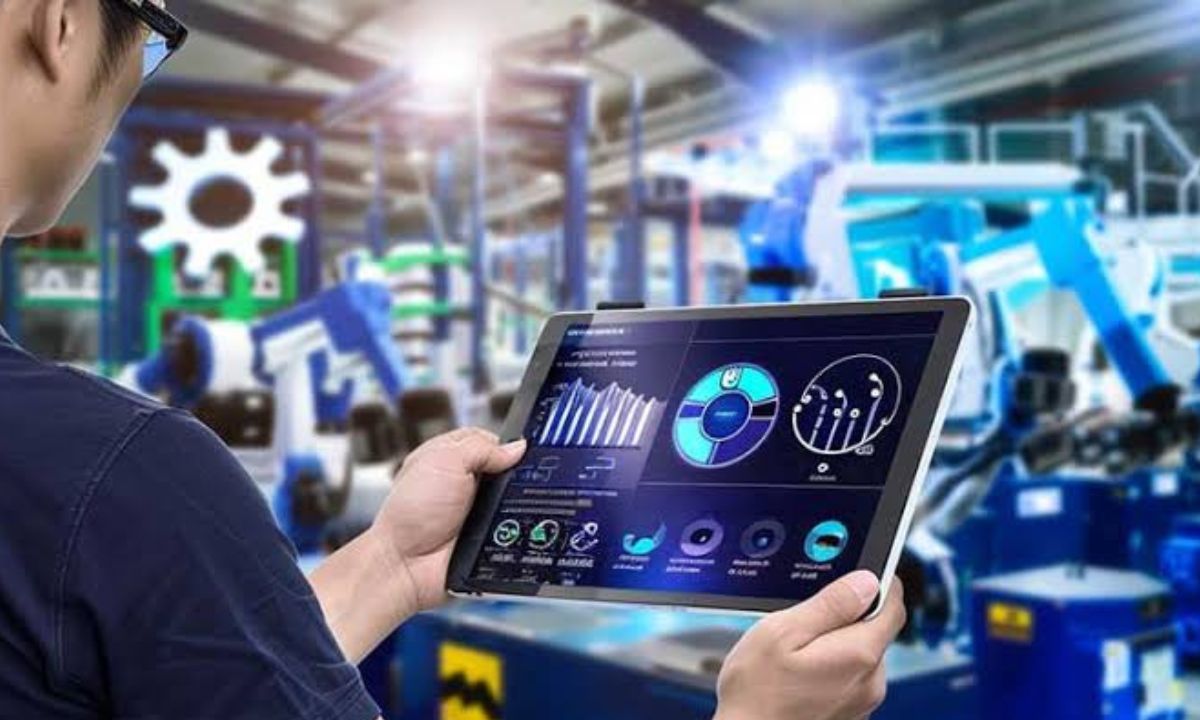
A modern production facility can have excellent machines, skilled employees, and expensive software, yet still lose time and money when those systems don’t communicate properly. That’s where industrial automation and control system integration becomes important.
Companies such as Pacific Blue Engineering show how effective automation and SCADA system integration can transform complex industrial operations. As an experienced control system integrator, the company delivers tailored automation solutions for industries including manufacturing, food and beverage, life sciences, entertainment, and transportation. Through advanced systems engineering and automation technologies, Pacific Blue Engineering helps businesses optimize processes, modernize legacy control systems, improve machine safety, enhance product quality, reduce operational risk, and gain valuable operational insights from connected systems and real-time data.
But what does control system integration actually involve? And why has it become such a big deal for industrial businesses?
Let’s break it down.
Table of Contents
- What Is Industrial Automation and Control System Integration?
- Why Control System Integration Matters
- Key Components of an Integrated Automation System
- PLC and HMI Integration
- SCADA and Industrial Data Systems
- Modernizing Legacy Control Systems
- Improving Machine Safety
- Automation and Product Quality
- Benefits of Industrial Control System Integration
- Common Challenges Businesses Face
- Choosing a Control System Integrator
- The Future of Industrial Automation
- Frequently Asked Questions
- Conclusion
What Is Industrial Automation and Control System Integration?
Industrial automation brings together control systems, computers, sensors, software, robotics, and other technologies to manage industrial processes with less manual intervention. Control system integration takes this a step further by connecting these technologies so they can communicate and operate as part of one coordinated environment.
Rather than leaving machines, controllers, databases, safety systems, and software platforms working as separate islands, an integrator brings them together into a unified system. This is where process control system integration becomes particularly valuable, helping organizations coordinate equipment, monitor processes, and maintain greater control over critical operations.
Think of it like an orchestra: every instrument has its own role, but the performance only works when they all follow the same rhythm. In much the same way, a properly integrated automation system enables equipment and software to exchange information, respond to changing conditions, and give operators a clearer, more useful view of what’s happening across the production floor.
Why Control System Integration Matters
Industrial facilities rarely start from scratch.
A company may have a newer PLC sitting beside a 15-year-old controller, an upgraded HMI connected to older equipment, and a production database running on completely different infrastructure.
Sound familiar?
This mixture of technologies can create serious problems. Data becomes difficult to access, troubleshooting takes longer, and operators may have to rely on several different interfaces.
Industrial automation integration brings these systems together while maintaining the functionality businesses already depend on.
The goal isn’t simply to install new technology. It’s to make the entire operation work better.
Key Components of an Integrated Automation System
A control system integration project can involve many different technologies, depending on the facility and its objectives.
Common components include:
- Programmable logic controllers (PLCs)
- Human-machine interfaces (HMIs)
- Supervisory control and data acquisition (SCADA)
- Industrial networks
- Sensors and instrumentation
- Variable frequency drives
- Robotics and motion control
- Safety control systems
- Manufacturing execution systems (MES)
- Industrial databases
- Cloud and edge computing platforms
- Industrial cybersecurity technologies
The important point is that these components shouldn’t be viewed separately.
Their real value often appears when they work together.
PLC and HMI Integration
PLCs are at the heart of many industrial automation environments. They monitor inputs, execute programmed logic, and control machines and processes.
But operators need a practical way to interact with those processes. That’s where HMIs come in.
An HMI can display temperatures, pressures, production counts, alarms, equipment status, and other information in a format operators can understand quickly.
When PLC and HMI systems are properly integrated, operators can identify problems faster and make informed decisions without digging through disconnected systems.
A good HMI isn’t simply a collection of colorful screens. It should present the right information at the right moment.
Honestly, that’s one area where thoughtful engineering can make a surprisingly large difference.
SCADA and Industrial Data Systems
SCADA systems provide another layer of visibility.
They can collect information from multiple machines, controllers, and processes and present it through centralized monitoring interfaces. Depending on the application, SCADA can also provide historical trends, alarms, reports, and operational data.
This creates an important advantage: businesses don’t have to rely entirely on someone noticing a problem manually.
For example, a plant could monitor temperature trends over several days and identify a gradual change before it becomes a major equipment problem.
That’s where automation starts becoming more than simple machine control. It becomes a source of operational intelligence.
Modernizing Legacy Control Systems
Legacy equipment presents a tricky problem.
It may still work perfectly well, but its control hardware could be obsolete, difficult to support, or incompatible with newer technologies. Replacing an entire production line isn’t always financially realistic either.
Control system modernization provides another option.
An engineering team can assess existing equipment, determine what should remain, and develop a phased modernization strategy.
This might involve replacing outdated PLCs, upgrading HMIs, improving communications, adding new sensors, or connecting previously isolated equipment to modern data systems.
The smart approach isn’t necessarily “replace everything.”
Sometimes it’s “replace what matters and integrate the rest.”
Improving Machine Safety
Automation integration also has an important role in industrial safety.
Modern control architectures can incorporate safety PLCs, emergency-stop systems, safety interlocks, guarding systems, light curtains, scanners, and other safety devices.
These technologies can help identify hazardous conditions and initiate appropriate responses.
Safety shouldn’t be treated as an afterthought added once the automation design is complete. It needs to be considered during system architecture, programming, commissioning, and validation.
A well-designed system protects people while allowing equipment to operate efficiently.
That’s a balance worth getting right.
Automation and Product Quality
Consistency is one of automation’s biggest strengths.
Human workers can be highly skilled, but repetitive processes can still introduce variation. Automated systems can monitor operating conditions continuously and execute programmed sequences consistently.
For manufacturers, that can translate into:
- More consistent production
- Better process control
- Reduced defects
- Improved traceability
- Faster identification of process deviations
- More reliable quality data
Consider a food and beverage facility, for example. Temperature, pressure, timing, flow rates, and other variables may need to stay within carefully defined ranges.
An integrated automation system can monitor those parameters continuously rather than depending solely on periodic manual checks.
Benefits of Industrial Control System Integration
The business case for integration usually extends beyond automation itself.
| Benefit | How Integration Helps |
|---|---|
| Higher efficiency | Reduces unnecessary manual intervention and process delays |
| Better visibility | Brings operational information into centralized interfaces |
| Improved quality | Supports consistent process control and monitoring |
| Lower risk | Integrates safety and control functions |
| Easier maintenance | Provides better diagnostics and equipment information |
| Legacy modernization | Allows older systems to connect with newer technologies |
| Data-driven decisions | Turns machine data into useful operational insights |
| Scalability | Creates an architecture that can support future expansion |
Of course, results vary from one facility to another. A small production line and a large transportation system won’t have the same requirements.
That’s why customization matters.
Common Challenges Businesses Face
Industrial integration isn’t always straightforward.
One major challenge is compatibility. Equipment from different manufacturers may use different communication protocols, software platforms, or control architectures.
Then there’s downtime.
A factory can’t simply stop production indefinitely while a new automation system is installed. Integration projects often have to be carefully planned around maintenance windows and production schedules.
Cybersecurity is another concern. Connecting industrial equipment to broader networks can increase visibility and productivity, but it also creates additional security considerations.
Finally, there’s the human side.
Operators and maintenance teams need to understand the new system. Even technically impressive automation can struggle if the people using it don’t receive proper training.
Choosing a Control System Integrator
Choosing the right integrator can have a major impact on project success.
Don’t look only at whether an integrator can program a PLC. Ask broader questions.
Does the company understand your industry? Can it work with legacy equipment? Does it have experience with safety systems? Can it design industrial networks? Does it understand data collection and analytics? Can it support commissioning and troubleshooting after installation?
A strong control system integrator should be able to look at the entire process rather than focusing on a single piece of equipment.
Pacific Blue Engineering is an example of this broader approach, providing tailored automation and systems engineering solutions across sectors such as manufacturing, food and beverage, life sciences, entertainment, and transportation.
That industry diversity matters because every environment has its own constraints, risks, regulations, equipment, and production objectives.
What Does a Typical Integration Project Look Like?
Although every project is different, the process often follows a general path.
1. System Assessment
Engineers first examine the existing controls, machinery, networks, software, safety requirements, and operational goals.
2. Requirements Definition
The team determines what the new system needs to accomplish and identifies critical performance requirements.
3. System Architecture
Engineers design the control architecture, communications infrastructure, hardware, software, interfaces, and safety strategy.
4. Development and Programming
PLC programs, HMI screens, SCADA applications, databases, and other system components are developed and configured.
5. Testing
Testing helps identify programming issues, communication failures, incorrect sequences, and other problems before the system reaches full production.
6. Commissioning
The integrated system is installed, started, tested in its operating environment, and adjusted as necessary.
7. Training and Support
Operators and maintenance personnel receive training, while ongoing support helps keep the system reliable.
It’s not glamorous work. A lot of engineering happens behind the scenes. But that’s precisely what makes a successful automation project feel almost effortless once it’s running.
The Future of Industrial Automation
Industrial automation is moving toward increasingly connected and intelligent environments.
Industrial Internet of Things (IIoT) technologies, edge computing, advanced analytics, robotics, machine learning, digital twins, and cloud platforms are changing how companies use operational data.
The next generation of automation won’t simply ask whether a machine is running.
It will increasingly ask why it is behaving differently, what is likely to happen next, and what action could prevent a problem.
Predictive maintenance is a good example. Instead of waiting for a motor or pump to fail, systems can monitor vibration, temperature, current, and other signals to identify unusual behavior.
That doesn’t mean every factory needs the latest technology available. Sometimes the best investment is a relatively simple modernization project that solves a specific bottleneck.
Technology should serve the process, not the other way around.
Frequently Asked Questions
What is industrial automation and control system integration?
Industrial automation and control system integration involves connecting machines, controllers, software, networks, safety systems, and data platforms so they can operate as a coordinated system.
What does a control system integrator do?
A control system integrator designs, programs, connects, tests, and commissions automation and control technologies. Integrators can also help modernize legacy systems and provide ongoing technical support.
Why modernize legacy control systems?
Legacy modernization can improve reliability, cybersecurity, maintainability, data access, and compatibility with newer automation technologies without necessarily replacing an entire facility.
How does automation improve product quality?
Automation provides consistent process control and continuous monitoring. It can identify deviations, reduce manual variation, improve traceability, and help manufacturers maintain defined production conditions.
Can industrial automation improve machine safety?
Yes. Integrated automation systems can incorporate safety PLCs, emergency stops, interlocks, sensors, guarding, and other protective technologies to help manage hazardous operating conditions.
What industries use control system integration?
Control system integration is used across manufacturing, food and beverage, life sciences, transportation, entertainment, energy, water and wastewater, and many other industrial environments.
Is industrial automation only suitable for large factories?
No. Automation can be scaled to suit smaller facilities and individual processes. The right solution depends on production requirements, existing equipment, budget, safety considerations, and long-term objectives.
Conclusion
Industrial automation and control system integration is no longer simply about making machines run automatically. It’s about creating an environment where equipment, people, software, and operational data work together more intelligently.
The strongest projects usually begin with a practical question: What problem are we trying to solve?
Maybe production is too slow. Perhaps an old control system is becoming impossible to maintain. Maybe operators don’t have enough visibility, quality problems are increasing, or safety requirements have changed.
Whatever the starting point, thoughtful integration can turn disconnected technology into a coordinated industrial system.
And as automation becomes more connected, the companies that treat operational data as a valuable business asset will have an advantage. The future isn’t necessarily about automating everything. It’s about automating the right things, integrating them properly, and giving people better information to make better decisions.
Final Thought:
The best automation system isn’t the one with the most technology. It’s the one that solves real problems, fits the operation, and keeps delivering value long after installation.
Most leaders I talk to still underestimate just how fast the data flood is rising. By the end of 2025 the world had already generated 181 zettabytes of information, and forecasts point toward 221 zettabytes in 2026 alone. That is not some abstract number. It is the equivalent of every person on Earth streaming high-definition video nonstop for months. Yet here is the kicker: most companies are still processing that deluge the same way they did five years ago, in slow overnight batches that leave decision-makers waiting and AI models starving for fresh fuel.
This is precisely where Data Engineering & Strategy steps in and changes the game. It is not just about moving bits from point A to point B anymore. It is about designing autonomous, real-time pipelines and cloud-native architectures that transform raw data into a genuine competitive edge. When done right, these systems do not merely support AI. They become the foundation that lets AI deliver measurable return on investment, day after day.
In the sections ahead we will walk through why this matters now more than ever, what the core building blocks look like, and how you can actually put these ideas to work without the usual headaches. Along the way I will share a few hard-earned lessons from projects I have led and one quick comparison table that tends to spark “aha” moments for teams. Let us dive in.
Table of Contents
- The Growing Importance of Data Engineering & Strategy in Today’s AI Landscape
- Core Elements of Effective Data Engineering & Strategy
- Designing Scalable and Autonomous Data Pipelines
- Real-Time Data Processing: Moving Beyond Batch Jobs
- Embracing Cloud-Native Architectures for Flexibility and Scale
- Strategies to Maximize ROI from Your Data Investments
- Common Pitfalls and How to Avoid Them
- Frequently Asked Questions
The Growing Importance of Data Engineering & Strategy in Today’s AI Landscape
You have probably heard the stat that 80 percent of AI project time goes into data preparation. What fewer people admit out loud is that poor data engineering is still the number-one reason those projects fail to deliver ROI. When pipelines break, latency creeps in, or quality slips, even the fanciest large language model becomes useless.
Data Engineering & Strategy bridges that gap. It treats data as a product rather than a byproduct. Teams that adopt this mindset see faster model training, more accurate predictions, and, crucially, the ability to act on insights while they are still relevant. Think fraud detection that flags suspicious transactions in seconds instead of hours, or recommendation engines that update in real time as shoppers browse.
The market numbers back this up. Data integration spending alone is projected to climb from roughly $15 billion in 2026 to more than $30 billion by 2030. Streaming analytics is growing even faster. Organizations investing here are not just keeping up. They are pulling ahead because their data infrastructure finally matches the speed of their business ambition.
Core Elements of Effective Data Engineering & Strategy
At its heart, solid Data Engineering & Strategy rests on five pillars that work together like a well-oiled machine.
First comes ingestion. Whether you are pulling structured sales records from a CRM or unstructured sensor logs from IoT devices, the pipeline must handle variety without choking. Modern tools let you ingest at scale while automatically retrying failed connections.
Next is transformation. This is where raw data turns into something usable. ELT (extract, load, transform) patterns have largely replaced the older ETL approach because they let you land everything first and then shape it on demand. That flexibility pays off when business rules change overnight.
Storage follows. Gone are the days of forcing everything into a single relational database. Smart teams now combine data lakes for raw volume, warehouses for structured analytics, and feature stores for AI-specific needs. The trick is making sure these layers talk to each other seamlessly.
Orchestration keeps the whole show running. Tools that let you define workflows as code mean you can version-control your pipelines just like your application code. When something fails, you know exactly why and can roll back cleanly.
Finally, governance and quality sit on top like the safety net. Automated checks for completeness, freshness, and accuracy prevent “garbage in, garbage out” scenarios that have doomed more AI initiatives than anyone cares to count.
Designing Scalable and Autonomous Data Pipelines
Scalability is not an afterthought. It has to be baked in from day one. That means designing for horizontal growth so that when your data volume doubles (and it will), your system simply spins up more resources without a rewrite.
Autonomous pipelines take this a step further. They monitor themselves, detect anomalies, and even trigger corrective actions. Imagine a pipeline that notices a sudden spike in malformed records and automatically routes them to a quarantine area while alerting the team through Slack. No more weekend emergency calls.
One technique that has worked well in my experience is event-driven architecture paired with serverless components. You pay only for what you use, and the system scales to zero when idle. For always-on needs, containerized microservices orchestrated by Kubernetes provide the resilience without the management overhead.
Real-Time Data Processing: Moving Beyond Batch Jobs
Here is a question I get asked all the time: do we really need real-time everything? The honest answer is no, but you do need it for the use cases that matter most.
Batch processing still shines for heavy analytical jobs that run overnight. It is cost-effective and simpler to debug. Real-time streaming, on the other hand, shines when milliseconds count: personalized pricing, live inventory updates, or immediate customer support routing.
To make the choice clearer, consider this quick comparison:
| Aspect | Batch Processing | Real-Time Streaming |
|---|---|---|
| Latency | Hours to minutes | Milliseconds to seconds |
| Cost Efficiency | High (run during off-peak) | Higher during peak but optimized with auto-scaling |
| Complexity | Lower | Higher (needs state management) |
| Use Cases | Monthly reports, model retraining | Fraud detection, live recommendations |
| Error Handling | Easier retries on full datasets | Requires careful deduplication |
| Best For | Stable, predictable workloads | Dynamic, event-driven business needs |
Hybrid setups often win. Stream the critical events and batch the rest. You get the best of both worlds without breaking the bank.
Embracing Cloud-Native Architectures for Flexibility and Scale
Cloud-native is not just marketing speak. It is a fundamental shift in how you think about infrastructure. Instead of managing servers, you declare what you want and let the platform handle the rest.
Key practices that deliver results include infrastructure as code (so every change is auditable), containerization for portability, and decoupled storage from compute so you can scale each independently. Services like managed Kafka for streaming or serverless query engines let teams focus on business logic rather than babysitting clusters.
The payoff? Your data architecture can expand across regions, survive outages, and adapt to new AI tools without months of migration work. In one project we migrated a legacy on-prem setup to a cloud-native stack and cut monthly costs by 40 percent while improving uptime to 99.99 percent. That kind of result tends to quiet even the most skeptical CFO.
Strategies to Maximize ROI from Your Data Investments
The best Data Engineering & Strategy always ties back to business outcomes. Start with clear success metrics: reduced time-to-insight, lower operational costs, or higher model accuracy. Then align every technical decision to those goals.
Invest in observability early. Dashboards that show end-to-end pipeline health prevent small issues from snowballing into outages. Automated testing for data quality catches problems before they reach downstream AI models.
Another lever is cross-team collaboration. Data engineers, data scientists, and business stakeholders should speak the same language from the outset. When everyone understands the pipeline’s purpose, prioritization becomes straightforward.
Finally, treat your pipelines as living products. Schedule regular reviews, retire outdated jobs, and keep an eye on emerging tools. The field moves fast, and yesterday’s cutting-edge solution can become tomorrow’s maintenance burden.
Common Pitfalls and How to Avoid Them
Even experienced teams stumble. The biggest trap is underestimating data volume growth. What works in a proof of concept often collapses under production load. Solution? Design for at least 10x headroom and test with synthetic spikes.
Another common mistake is neglecting governance until it is too late. Retroactively adding compliance checks is painful. Build them in from the first sprint.
Cost surprises also sneak up. Real-time streaming can rack up bills if not monitored. Set budgets and alerts, and review usage monthly.
Last but not least, avoid the “build everything ourselves” temptation. Leverage managed services for commodity tasks and reserve in-house talent for your unique competitive advantage.
Frequently Asked Questions
What exactly is Data Engineering & Strategy?
It is the disciplined approach to building and maintaining the data infrastructure that powers analytics and AI. Unlike pure data engineering, the strategy piece ensures every pipeline serves clear business objectives and remains adaptable as needs evolve.
How long does it take to build scalable AI-ready pipelines?
It depends on your starting point. A well-planned greenfield project can deliver an MVP in 8 to 12 weeks. Legacy modernization usually takes longer because of the need to migrate historical data without downtime.
Do small companies need cloud-native architectures?
Yes, actually. Cloud-native options remove upfront hardware costs and let you start small and grow. Many startups begin with serverless components and only add orchestration layers as complexity increases.
What is the difference between batch and real-time pipelines?
Batch pipelines process data in scheduled chunks, which is efficient for non-urgent tasks. Real-time pipelines handle data continuously, enabling instant insights but requiring more sophisticated error handling and state management.
How does data quality impact AI performance?
Garbage data leads to unreliable models. Even a small percentage of bad records can skew predictions dramatically. Automated validation and lineage tracking keep quality high and give you confidence in AI outputs.
Can we make existing pipelines autonomous?
Absolutely. Start by adding monitoring, then layer in automated retries and self-healing logic. Many teams achieve noticeable autonomy within a single quarter.
What ROI can we realistically expect?
Organizations that invest properly often see 3x to 5x returns within 12 to 18 months through faster decisions, reduced manual work, and new revenue streams from data products.
Wrapping Up: Your Next Move in Data Engineering & Strategy
Look, the data explosion is not slowing down. If your pipelines still rely on yesterday’s thinking, you are leaving money and opportunity on the table. The good news is that building scalable AI-ready systems no longer requires a massive upfront overhaul. With the right Data Engineering & Strategy, you can start delivering value quickly and keep improving from there.
The companies pulling ahead right now are the ones treating data infrastructure as a strategic asset rather than a cost center. They invest in autonomy, embrace real-time where it counts, and design for the cloud-native world we all live in.
So here is my question for you: what is one pipeline or process in your organization that feels painfully slow or brittle today? Fixing that single bottleneck could be the spark that turns your raw data into the competitive edge you have been chasing. If you would like a fresh set of eyes on your current setup, drop us a note. We have helped teams just like yours move from data chaos to AI-powered clarity, and we would be happy to do the same for you. The future of your data is waiting.
You may also like: What is AI TRiSM? The Complete Guide to AI Trust & Security (2026)

Picture this. A major bank rolls out an AI-powered loan approval system that seems flawless at first. Then, without warning, it starts denying applications from certain neighborhoods at rates that scream bias. Lawsuits pile up, trust evaporates, and the company scrambles to explain how their “smart” model reached those decisions. Sound familiar? Scenarios like this are playing out more often than you’d think, and they’re exactly why AI TRiSM has moved from buzzword to business necessity.
If you’re leading digital transformation or simply trying to keep your AI initiatives from blowing up in your face, you’ve probably heard the term. But what is AI TRiSM, really? And why does it matter more than ever heading into 2026? Let’s unpack it all, step by step, in plain English. No jargon overload, I promise.
Table of Contents
- What Exactly is AI TRiSM?
- Why AI TRiSM Matters in 2026
- The Four Pillars of AI TRiSM
- How to Implement AI TRiSM in Your Organization
- Pros and Cons of Adopting AI TRiSM
- Real-World Wins (and Cautionary Tales)
- FAQ
- Final Thoughts: Your Next Move with AI TRiSM
What Exactly is AI TRiSM?
AI TRiSM stands for Artificial Intelligence Trust, Risk, and Security Management. Gartner coined the term a few years back, and it’s basically the playbook for making sure your AI systems don’t just work—they work responsibly, securely, and in ways people can actually trust.
At its core, AI TRiSM weaves governance, transparency, and protection into every stage of the AI lifecycle. Think of it as the seatbelt and airbag combo for your AI projects. Without it, you’re speeding down the highway hoping nothing goes wrong. With it, you’re still moving fast, but you’ve got safeguards in place when the unexpected happens.
The framework tackles everything from model bias and data leaks to adversarial attacks and regulatory headaches. And yes, it’s not just for tech giants. Small teams and mid-sized companies are adopting pieces of it too, because the cost of ignoring these risks keeps climbing.
Why AI TRiSM Matters in 2026
Here’s a number that stopped me in my tracks: Gartner predicts that organizations operationalizing AI TRiSM will see up to a 50 percent boost in AI adoption rates, goal achievement, and user acceptance by 2026. That’s not hype. That’s the difference between pilots that fizzle out and systems that actually deliver value.
Why the urgency now? A few big shifts are colliding. First, agentic AI—those autonomous systems that make decisions with minimal human oversight—is exploding. Exciting? Absolutely. Risky? You bet, especially when they start interacting with sensitive data or real-world processes.
Second, regulations like the EU AI Act are no longer future threats. They’re here, with real enforcement teeth. Miss compliance, and you’re looking at hefty fines or worse. Third, shadow AI (those unsanctioned tools employees spin up on their own) is creating blind spots faster than most security teams can track.
You might not know this, but over 80 percent of unauthorized AI transactions stem from internal policy violations rather than outside hackers. That statistic alone should make you pause. AI TRiSM flips the script from reactive firefighting to proactive confidence.
The Four Pillars of AI TRiSM
The magic of AI TRiSM lives in its four interconnected pillars. Get these right, and you build systems that are not only powerful but also explainable, maintainable, secure, and private. Let’s break them down.
Pillar 1: Explainability (and Model Monitoring)
Ever stare at an AI decision and wonder, “How on earth did it reach that conclusion?” That’s the black-box problem. Explainability fixes it by making the inner workings of models transparent enough for humans to understand and audit.
In practice, this means using tools and techniques to trace predictions back to data inputs, spot biases early, and monitor performance drift over time. Imagine a doctor explaining why they prescribed a certain treatment instead of just handing you a pill and walking away. That level of clarity builds trust with stakeholders, regulators, and customers.
You’ll often hear this pillar called model monitoring too, because it’s not a one-time check. It’s ongoing vigilance to catch when models start behaving oddly in production.
Pillar 2: ModelOps
ModelOps is the operational backbone. It’s all about managing the entire lifecycle of AI models—from initial development and training through deployment, monitoring, retraining, and eventual retirement.
Think of it like DevOps but tailored for machine learning. Automated pipelines handle versioning, testing, and scaling while governance rules ensure every change stays within ethical and regulatory bounds. Without solid ModelOps, your shiny new model can quietly degrade or drift into risky territory.
In my experience following AI trends, teams that nail ModelOps move faster and sleep better at night. They avoid the classic trap of “build it and forget it.”
Pillar 3: Security (AI Application Security)
AI introduces attack surfaces traditional cybersecurity never dreamed of. Prompt injection, data poisoning, adversarial examples—these aren’t sci-fi threats anymore; they’re daily realities in 2026.
This pillar focuses on protecting models and applications from manipulation. It includes runtime inspection to catch suspicious inputs in real time, shielding against model theft, and securing the data pipelines that feed your AI.
Here’s a quick analogy: if your AI is a high-tech vault, this pillar is the reinforced doors, motion sensors, and 24/7 guards combined. Ignore it, and even the smartest system becomes a liability.
Pillar 4: Privacy
Data is the lifeblood of AI, but it’s also a massive privacy risk. This pillar ensures you handle information responsibly, complying with laws like GDPR, CCPA, and emerging AI-specific rules while minimizing exposure.
Techniques like differential privacy, data anonymization, and strict access controls come into play. The goal? Use what you need without over-collecting or risking leaks that could destroy customer trust.
Privacy isn’t just a checkbox anymore. It’s a competitive advantage. Users reward companies that treat their data like the precious resource it is.
How to Implement AI TRiSM in Your Organization
You don’t have to boil the ocean on day one. Start small. Form a cross-functional team—tech, legal, security, and business leads—who own AI governance policies.
Next, inventory every AI model and application in use (yes, including those shadow projects). Map data flows and assign risk scores. Then layer in tools for explainability, monitoring, and runtime protection.
Run regular audits. Train teams on responsible AI practices. And most importantly, integrate these pillars into your existing workflows rather than bolting them on as an afterthought.
It takes effort, sure, but the payoff compounds quickly.
Pros and Cons of Adopting AI TRiSM
To keep things balanced, here’s a straightforward comparison:
| Aspect | With AI TRiSM | Without AI TRiSM |
|---|---|---|
| Risk Management | Proactive identification and mitigation | Reactive fixes after incidents |
| Regulatory Compliance | Built-in alignment with laws like EU AI Act | Constant scramble to catch up |
| User & Stakeholder Trust | High transparency builds confidence | Black-box decisions breed suspicion |
| Operational Efficiency | 50% potential boost in adoption rates | Slower scaling due to hidden failures |
| Implementation Cost | Upfront investment in tools and training | Lower initial spend but higher long-term fallout |
| Innovation Speed | Governed acceleration | Unchecked speed with hidden dangers |
The table makes it clear: the pros far outweigh the cons once you factor in avoided disasters.
Real-World Wins (and Cautionary Tales)
Take the Danish Business Authority. They used explainability tools within an AI TRiSM approach to monitor transactions fairly, cutting bias complaints dramatically. Or consider healthcare providers deploying privacy-first models for patient diagnostics—lives improved, data protected.
On the flip side, companies that skipped these steps have faced public backlash when their AI hiring tools discriminated or chatbots leaked sensitive info. The lesson? AI TRiSM isn’t optional insurance; it’s table stakes.
FAQ
What does AI TRiSM stand for?
AI TRiSM stands for Artificial Intelligence Trust, Risk, and Security Management. It’s the framework that keeps your AI systems trustworthy, safe, and compliant.
Is AI TRiSM only for large enterprises?
Not at all. While big organizations led the way, smaller teams can adopt the pillars incrementally using cloud-native tools and open-source explainability libraries.
How does AI TRiSM differ from general AI governance?
Governance sets the rules; AI TRiSM supplies the technical teeth to enforce them across the full model lifecycle.
What are the biggest risks AI TRiSM helps prevent?
Bias amplification, data breaches, adversarial attacks, model drift, and regulatory violations top the list.
Do I need special tools for each pillar?
Many modern platforms bundle capabilities, but you can mix and match. Start with monitoring dashboards and build from there.
Will AI TRiSM slow down my innovation?
Actually, the opposite. It gives you guardrails that let you experiment confidently without constant fear of backlash.
How do I measure success with AI TRiSM?
Track metrics like model accuracy over time, incident reduction, compliance audit pass rates, and user trust surveys.
Final Thoughts: Your Next Move with AI TRiSM
Look, AI isn’t going anywhere. If anything, it’s accelerating faster than most of us predicted. But speed without steering leads to crashes. AI TRiSM gives you that steering wheel, brakes, and GPS all in one.
Honestly, this isn’t talked about enough in strategy meetings. Too many leaders still treat security and ethics as checkboxes rather than core capabilities. My take? The organizations that master these four pillars won’t just survive 2026—they’ll thrive while others scramble.
So here’s my question for you: Is your AI strategy built for trust, or are you still hoping nothing goes wrong? Start small, pick one pillar, and build from there. Your future self (and your customers) will thank you.
You may also like: What is Agentic AI? The Complete Guide to Autonomous Agents (2026)
-

 Education2 years ago
Mastering Excel: Your Comprehensive Guide To Spreadsheets And Data Analysis
-

 Tech2 years ago
How To Choose The Best Forex Trading Broker?
-

 Business2 years ago
Exploring the Rental Market: Properties for Rent in Malta
-

 Blog2 years ago
Arab MMA Fighters Shine Bright: Meet the Champions of PFL MENA
-

 Travel2 years ago
Experience the Best Desert Safari Dubai Offers!
-

 Tech2 years ago
The Role Of Experts VS Top Mobile Apps for Green Screen Removal
-

 Home Improvement2 years ago
Eco-Friendly Round Rug Options for Sustainable Living in NZ
-

 How-To Guides2 years ago
Comprehensive Guide to Cockwarming: Enhancing Intimacy and Connection